Introduction
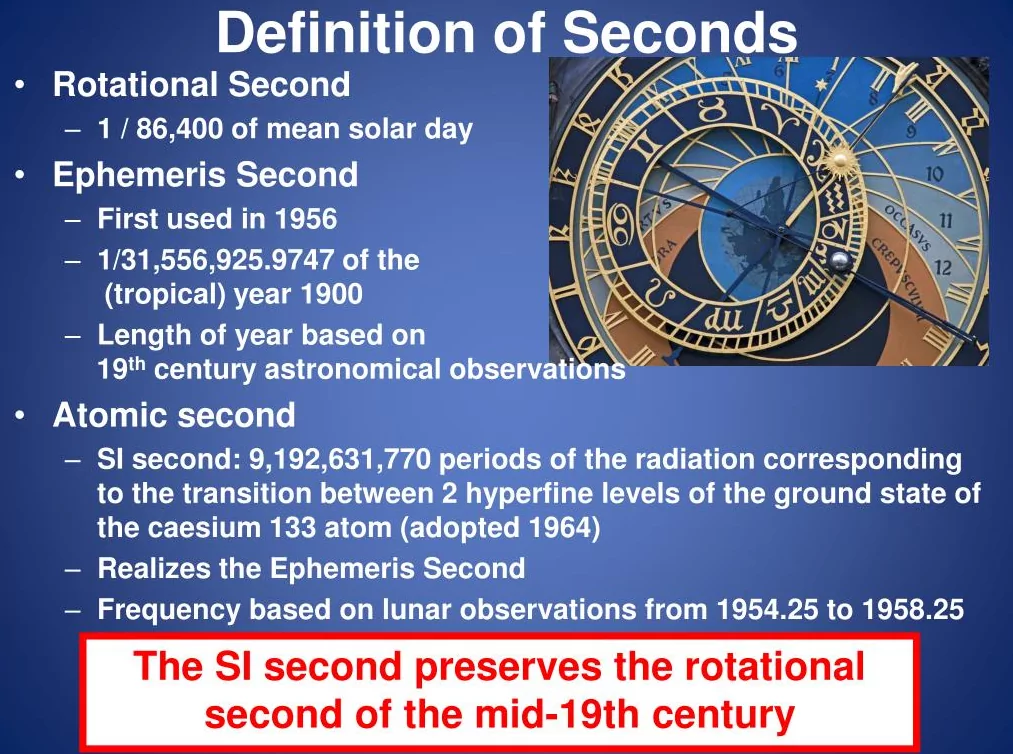
The calendar is one of humanity’s most important inventions, helping societies organize agriculture, religious observances, trade, and daily life. For centuries, much of the Western world relied on the Julian Calendar, a system introduced by the Roman leader Julius Caesar in 45 BCE. However, by the late 16th century, inaccuracies in the Julian Calendar had become increasingly noticeable, leading to the introduction of the Gregorian Calendar in 1582.
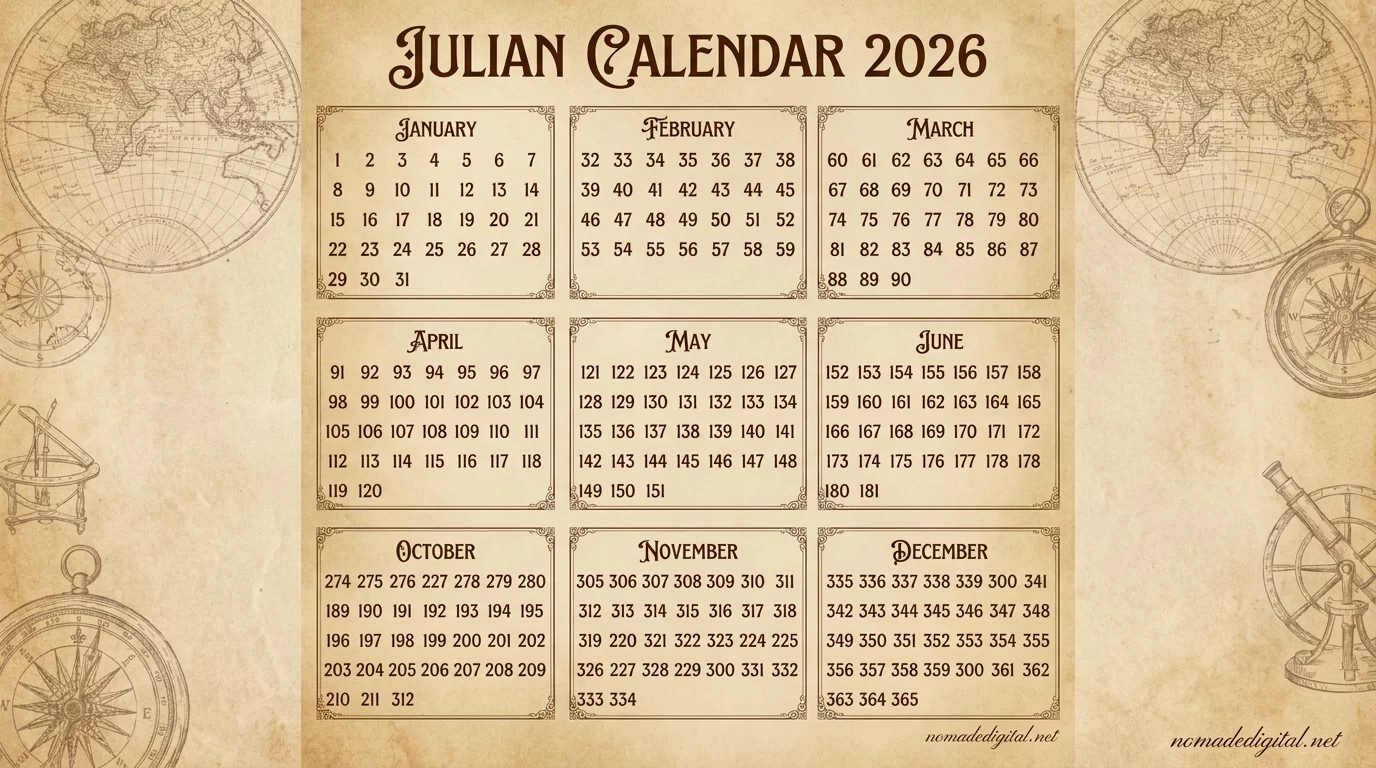
Today, the Gregorian Calendar is the internationally accepted civil calendar used by most countries around the world. But why was it necessary to replace the Julian Calendar? What problems did the older system create, and how did the Gregorian reform solve them?
This article explores the historical reasons behind the calendar change and explains how the Gregorian Calendar became the global standard.
The Origins of the Julian Calendar
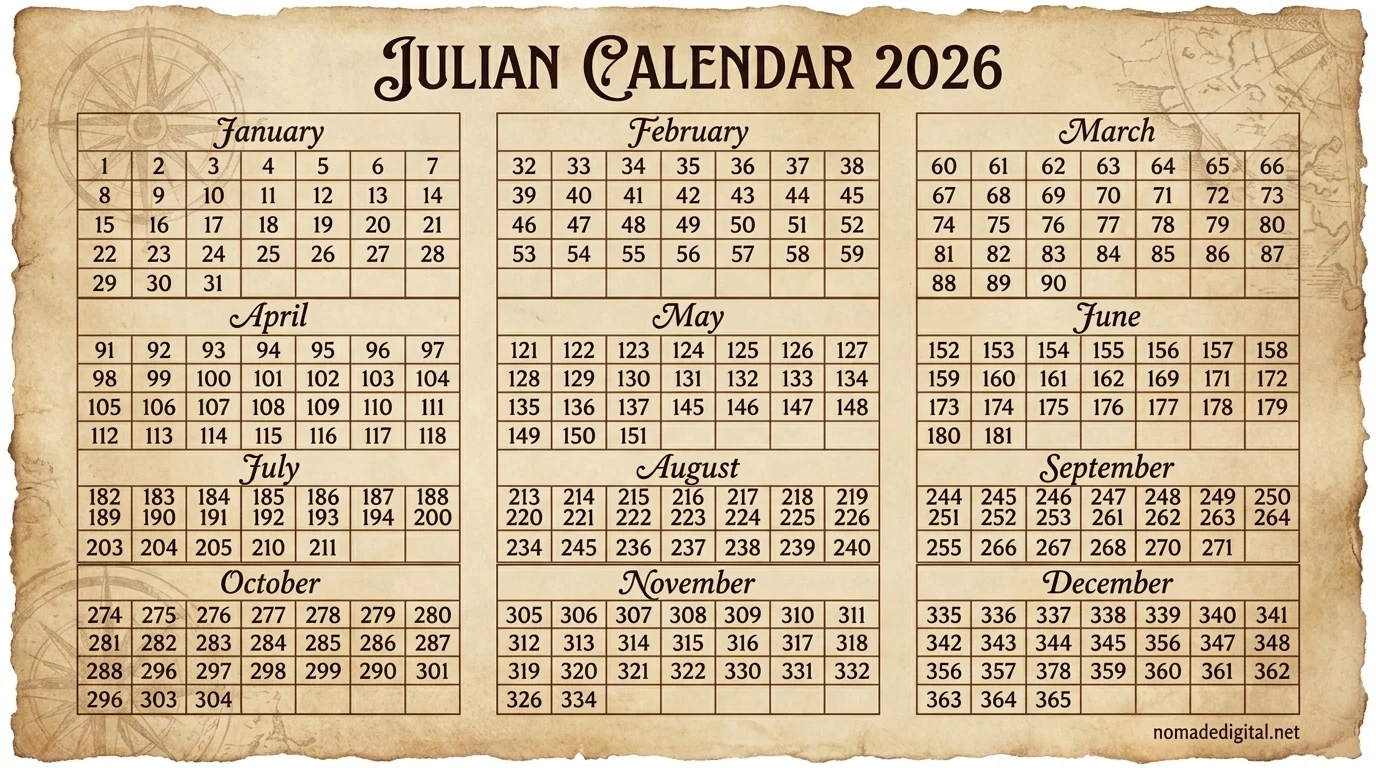
Before the Julian reform, the Roman calendar was complicated and often manipulated for political purposes. To address these issues, Julius Caesar consulted astronomers, particularly those familiar with Egyptian timekeeping methods.
The Julian Calendar introduced several major improvements:
- A standard year length of 365 days
- An extra leap day every four years
- Twelve fixed months
- Greater consistency throughout the Roman Empire
At the time, the reform was remarkably accurate and represented a significant advancement in calendar science.
The Julian system assumed that a solar year lasted exactly 365.25 days. Since a quarter of a day accumulates each year, adding one extra day every four years seemed like a practical solution.
For many centuries, the calendar worked well. However, a small mathematical error eventually created a much larger problem.
The Problem with the Julian Calendar
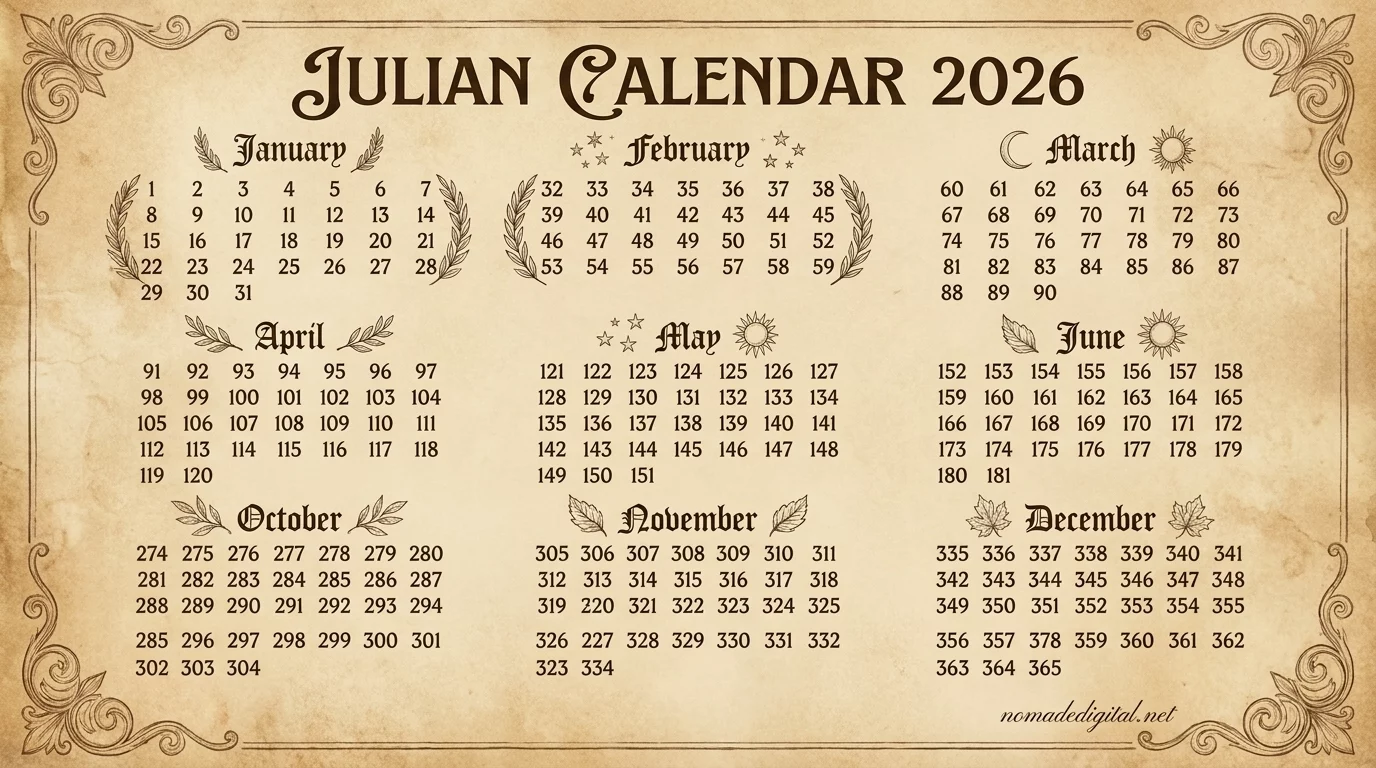
The Earth’s actual orbit around the Sun is slightly shorter than 365.25 days.
Modern measurements show that the tropical year—the time between successive spring equinoxes—is approximately 365.2422 days long.
This means the Julian Calendar overestimated the solar year by about:
Although this difference appears tiny, it accumulates over time.
The result was a gradual drift between the calendar and the astronomical seasons. The calendar gained approximately one day every 128 years.
By the 1500s, the discrepancy had grown to roughly ten days.
Why the Drift Became a Serious Issue
For ordinary citizens, a few days of drift may not have seemed important. However, for religious authorities and astronomers, the problem was significant.
The Christian Church used the date of the spring equinox to calculate the timing of Easter. The equinox had been established as occurring around March 21 during the early centuries of Christianity.
As the Julian Calendar drifted, the actual equinox occurred earlier and earlier relative to the calendar date.
This caused increasing concern because religious observances were becoming disconnected from the astronomical events on which they were based.
Church leaders feared that the discrepancy would continue to grow, causing further confusion for future generations.
The Role of Pope Gregory XIII
In the late 16th century, reform efforts gained momentum under Pope Gregory XIII.
After consulting mathematicians, astronomers, and scholars, Pope Gregory XIII approved a new calendar system designed to correct the accumulated error and prevent future drift.
The reform became official through a papal decree in 1582.
This new system became known as the Gregorian Calendar.
How the Gregorian Calendar Corrected the Error
The Gregorian reform addressed two separate issues:
1. Removing the Existing Drift
By 1582, the calendar was approximately ten days ahead of the solar year.
To correct this discrepancy, ten calendar days were skipped.
In countries adopting the reform immediately:
- October 4, 1582, was followed by October 15, 1582.
This adjustment restored the spring equinox to its intended position.
2. Improving Leap Year Rules
The more important long-term solution involved modifying leap year calculations.
Under the Julian Calendar:
- Every fourth year was a leap year.
The Gregorian Calendar introduced an additional rule:
- Years divisible by 100 are not leap years.
- However, years divisible by 400 remain leap years.
Examples:
- 1700: Not a leap year
- 1800: Not a leap year
- 1900: Not a leap year
- 2000: Leap year
This refinement dramatically improved accuracy.
The Gregorian Calendar has an average year length of:
This is extremely close to the actual solar year.
Initial Resistance to the New Calendar
The transition was not immediate or universally accepted.
Catholic countries such as:
- Spain
- Portugal
- Italy
adopted the Gregorian Calendar quickly.
However, many Protestant and Orthodox regions were reluctant to accept a calendar introduced by the Catholic Church.
As a result, different countries continued using different calendars for centuries.
For example:
- Great Britain adopted it in 1752.
- Russia adopted it after the 1917 revolution in 1918.
- Some Orthodox churches still use the Julian Calendar for certain religious observances.
Impact on Society and History
The adoption of the Gregorian Calendar had significant consequences.
Improved Scientific Accuracy
Astronomers gained a more precise system aligned with Earth’s actual orbit.
This improved the accuracy of observations, calculations, and future scientific research.
Better Agricultural Planning
Since agricultural activities often depend on seasonal cycles, a calendar that remained synchronized with the seasons was extremely valuable.
International Coordination
As more countries adopted the Gregorian system, international communication, trade, diplomacy, and record-keeping became easier.
A common calendar reduced confusion and improved global cooperation.
Julian Calendar vs. Gregorian Calendar
| Feature | Julian Calendar | Gregorian Calendar |
|---|---|---|
| Introduced | 45 BCE | 1582 CE |
| Creator | Julius Caesar | Pope Gregory XIII |
| Leap Year Rule | Every 4 years | Modified century rule |
| Average Year Length | 365.25 days | 365.2425 days |
| Seasonal Accuracy | Gradual drift | Highly accurate |
| Global Usage Today | Limited | Worldwide standard |
The Gregorian Calendar represents a refinement rather than a complete replacement of the Julian system.
Many elements of the Julian Calendar remain visible in the modern calendar used today.
Why the Gregorian Calendar Remains the Global Standard
The Gregorian Calendar has proven remarkably effective.
Its accuracy means that it would take more than 3,000 years for an error of one day to accumulate.
This precision, combined with widespread international adoption, has made it the dominant civil calendar worldwide.
Governments, businesses, educational institutions, and international organizations rely on the Gregorian Calendar for scheduling and record-keeping.
Its continued use demonstrates the success of one of history’s most important scientific and administrative reforms.
Conclusion
The Gregorian Calendar replaced the Julian Calendar because the older system gradually drifted away from the actual solar year. Although the Julian Calendar was a groundbreaking achievement in its time, its assumption that a year lasted exactly 365.25 days introduced a small error that accumulated over centuries.
By the 1500s, the discrepancy had become large enough to affect religious observances and seasonal accuracy. Under the leadership of Pope Gregory XIII, the Gregorian reform corrected the accumulated drift and introduced improved leap-year rules that remain highly accurate today.
More than four centuries later, the Gregorian Calendar continues to serve as the world’s primary timekeeping system, demonstrating how a small mathematical adjustment can have a lasting impact on global civilization.