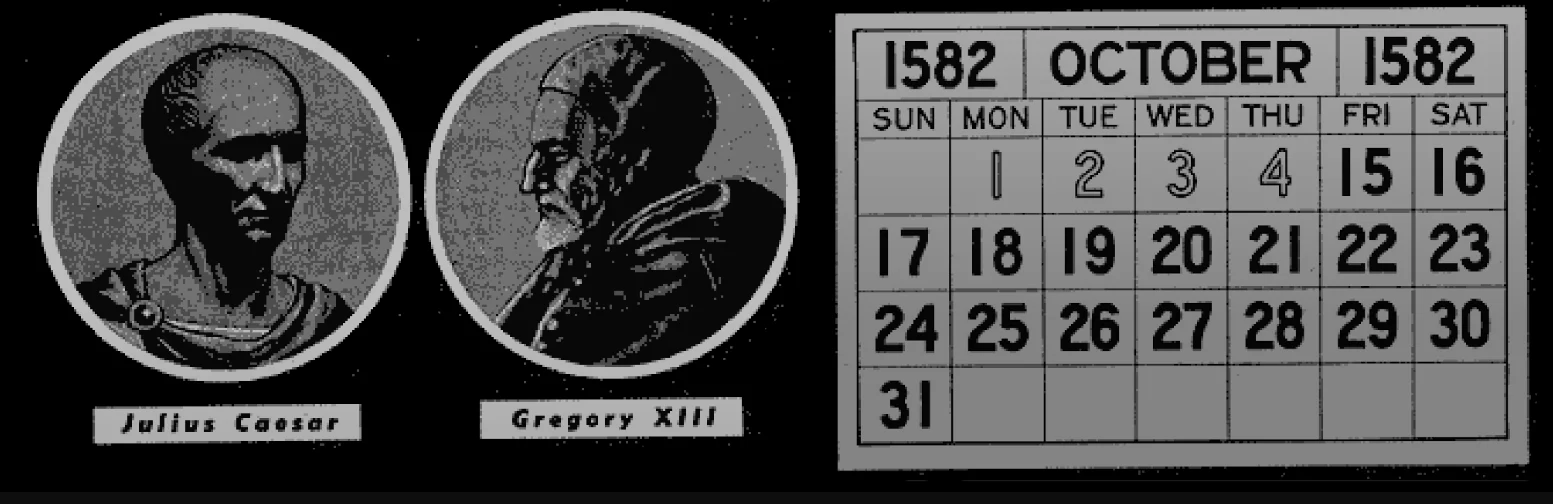
Imagine going to bed on October 4 and waking up the next day to discover it is October 15. No natural disaster occurred, no time travel was involved, and no days were actually lost. Yet this unusual event happened in several countries during October 1582 when the world began transitioning from the Julian Calendar to the Gregorian Calendar.
The so-called “Ten Lost Days” of October 1582 remain one of the most fascinating episodes in the history of timekeeping. The change was part of a major calendar reform introduced by Pope Gregory XIII to correct inaccuracies that had accumulated over centuries.
Although it may seem strange by modern standards, the disappearance of ten calendar days was a carefully planned solution to a long-standing astronomical problem. Understanding why those days vanished requires a look at the history of calendars, astronomy, religion, and international politics.
The Calendar Before 1582
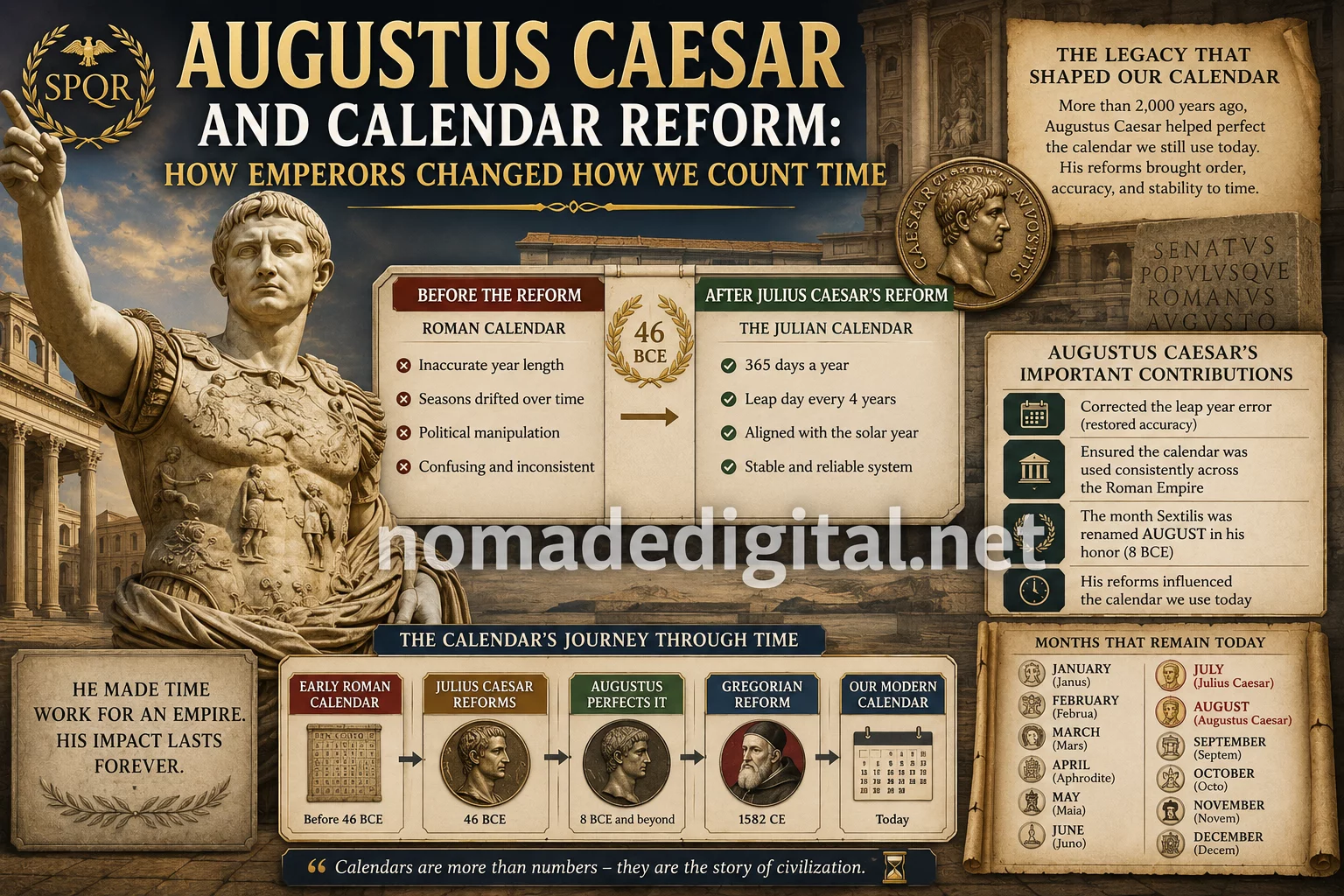
For more than 1,600 years, much of Europe used the Julian Calendar, introduced by Julius Caesar in 45 BCE.
The Julian system was revolutionary for its time. It established:
- A 365-day year
- Twelve months
- A leap year every four years
This structure brought stability to Roman timekeeping and later spread throughout Europe.
However, there was one small problem. The Julian Calendar assumed that the solar year lasted exactly 365.25 days.
Modern astronomy shows the actual tropical year is slightly shorter:
The difference is tiny—about 11 minutes per year—but over centuries it accumulated into a significant error.
How the Error Built Up
Because the Julian Calendar slightly overestimated the length of the year, calendar dates gradually drifted away from the astronomical seasons.
The calendar gained approximately one extra day every 128 years.
Over more than fifteen centuries, the discrepancy became substantial.
By the 1500s:
- The spring equinox was occurring about ten days earlier than expected.
- Religious feast calculations were becoming inaccurate.
- Seasonal dates no longer matched the intentions of earlier church authorities.
This drift created growing concerns among astronomers and church leaders.
Why the Church Wanted a Reform
One of the most important Christian holidays is Easter.
The date of Easter is linked to the spring equinox and lunar cycles. Church calculations established at the First Council of Nicaea assumed the equinox occurred around March 21.
As the calendar drifted, the actual equinox moved earlier relative to the calendar date.
Church officials feared that if no correction was made:
- Easter calculations would become increasingly inaccurate.
- Religious observances would drift further from their intended seasonal positions.
- Future generations would face even greater discrepancies.
A reform became necessary.
Pope Gregory XIII’s Solution
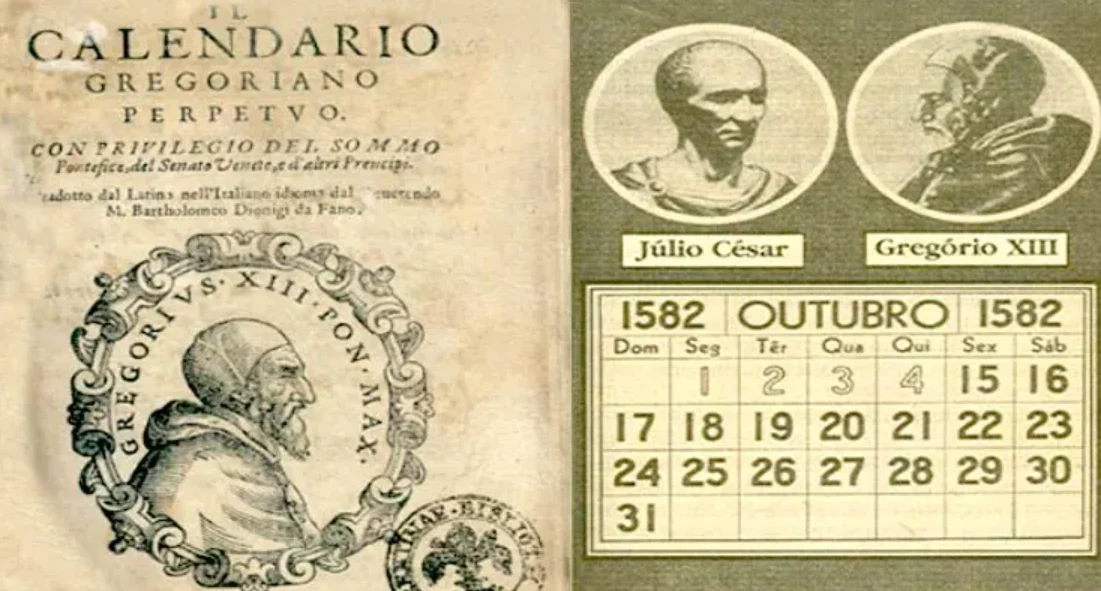
In 1582, Pope Gregory XIII approved a new calendar system developed by astronomers and mathematicians.
The reform had two goals:
- Eliminate the accumulated ten-day error.
- Prevent similar drift in the future.
The first goal required an immediate adjustment.
Rather than slowly correcting the problem over many years, reformers chose a direct solution.
Ten calendar dates would simply be omitted.
The Ten Lost Days
The official change occurred in October 1582.
In countries adopting the reform immediately:
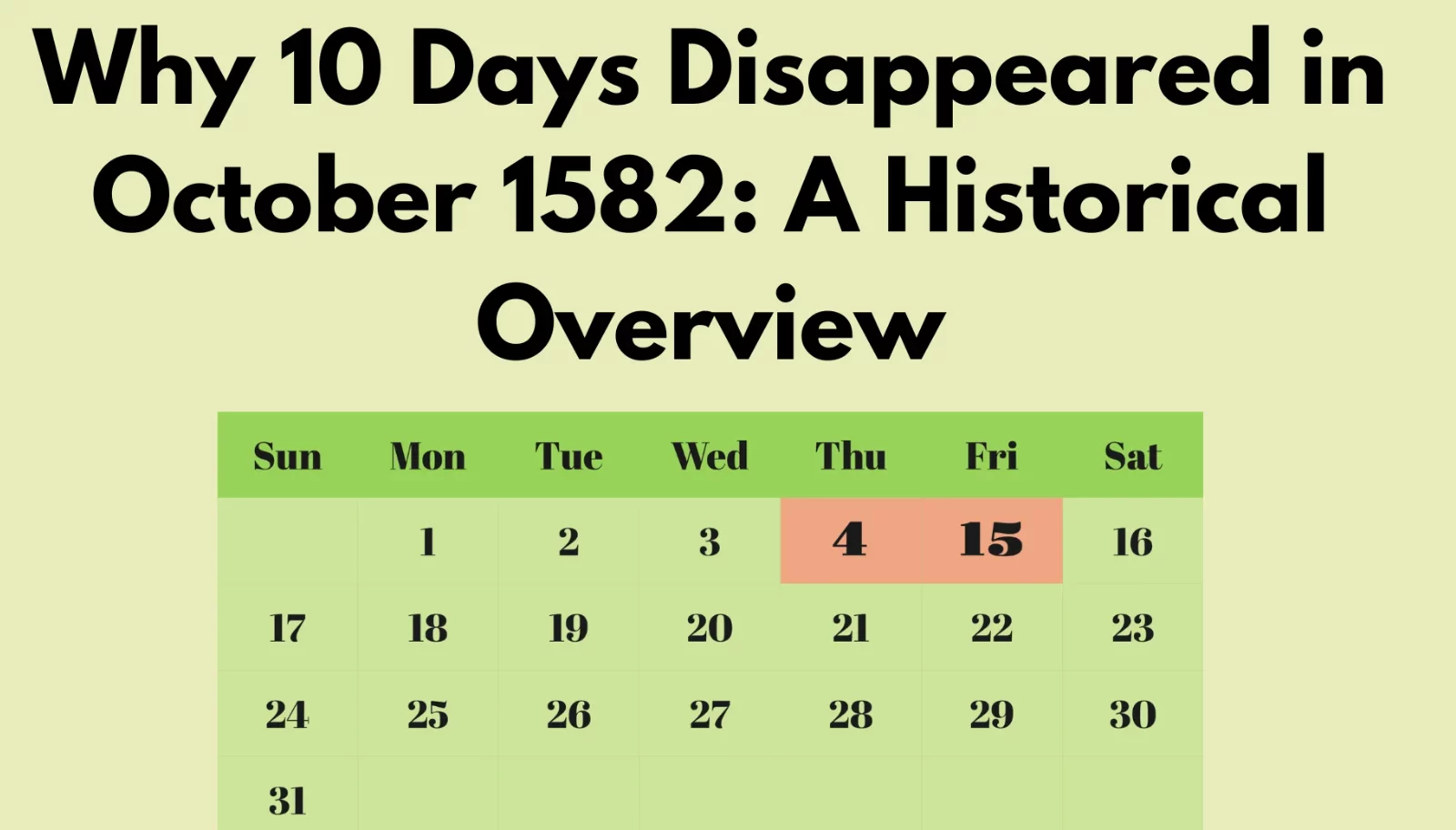
- Thursday, October 4, 1582, was followed by Friday, October 15, 1582.
The dates from October 5 through October 14 never existed in those regions.
To visualize the change:
| Old Calendar | New Calendar |
|---|---|
| October 4, 1582 | October 15, 1582 |
| October 5–14 | Skipped |
| October 15 onward | Continued normally |
No actual time disappeared.
People still experienced the normal passage of days. Only the calendar labels changed.
The adjustment realigned the calendar with the seasons and restored the spring equinox to approximately its traditional position.
Which Countries Lost the Days First?
The reform was initially adopted by Catholic nations.
Early adopters included:
- Spain
- Portugal
- Italy
- Poland
Citizens in these countries experienced the missing dates immediately.
However, many Protestant and Orthodox regions were suspicious of a reform introduced by the Catholic Church.
As a result, calendar adoption became uneven across Europe.
Public Reaction and Myths
The calendar change generated confusion, but many popular stories about widespread panic are exaggerated.
One famous legend claims that crowds demanded:
“Give us our ten days back!”
While the phrase is often repeated in books and popular culture, historians have found little evidence that large-scale riots occurred because of the skipped dates.
Most people accepted the change because governments, churches, and local authorities explained the adjustment.
Nevertheless, practical questions emerged:
- What happened to rent payments?
- How were wages calculated?
- Did contracts lose ten days?
- What about birthdays during the missing period?
Authorities generally developed local rules to handle these issues fairly.
Different Countries Changed at Different Times
One fascinating consequence of the reform was that neighboring countries sometimes operated under different calendars.
For example, the future United Kingdom and its colonies continued using the Julian Calendar for nearly 170 years.
When Britain finally adopted the Gregorian Calendar in 1752:
- September 2 was followed by September 14.
This time, eleven days were skipped because the discrepancy had grown further since 1582.
Meanwhile, Russia continued using the Julian Calendar until 1918.
This explains why some historical events have different dates depending on which calendar is referenced.
The Long-Term Impact
The Gregorian reform successfully solved the calendar drift problem.
The new leap-year rules improved accuracy dramatically.
Instead of treating every fourth year as a leap year, the Gregorian Calendar added special exceptions for century years.
Its average year length became:
This closely matches the Earth’s actual orbit around the Sun.
As a result:
- Seasonal dates remain stable.
- Astronomical calculations became more accurate.
- International coordination improved.
- The calendar became the global civil standard.
Why the Ten Lost Days Still Fascinate Us
The idea of missing days captures the imagination because it challenges our normal understanding of time.
People often wonder:
- Were those days truly lost?
- Did people age differently?
- What happened to birthdays and anniversaries?
The answer is simple: only the numbering changed.
The Earth continued rotating normally. The Sun continued rising and setting. Human lives continued without interruption.
The reform changed how dates were recorded, not how time itself passed.
Yet the event remains one of history’s most dramatic examples of society collectively adjusting its measurement of time.
Conclusion
The Ten Lost Days of October 1582 were not the result of a mistake or a mystery. They were a deliberate correction designed to solve a centuries-old problem in the Julian Calendar. Because the calendar year was slightly too long, dates gradually drifted away from the seasons, creating difficulties for astronomy and religious observance.
To restore accuracy, Pope Gregory XIII introduced the Gregorian Calendar and removed ten calendar dates. In countries adopting the reform, October 4, 1582, was immediately followed by October 15, 1582.
Although no actual time disappeared, the event became one of the most remarkable moments in the history of calendars. More than four centuries later, the Gregorian Calendar remains the world’s standard system for measuring dates, and the story of the Ten Lost Days continues to fascinate historians, scientists, and curious readers alike.