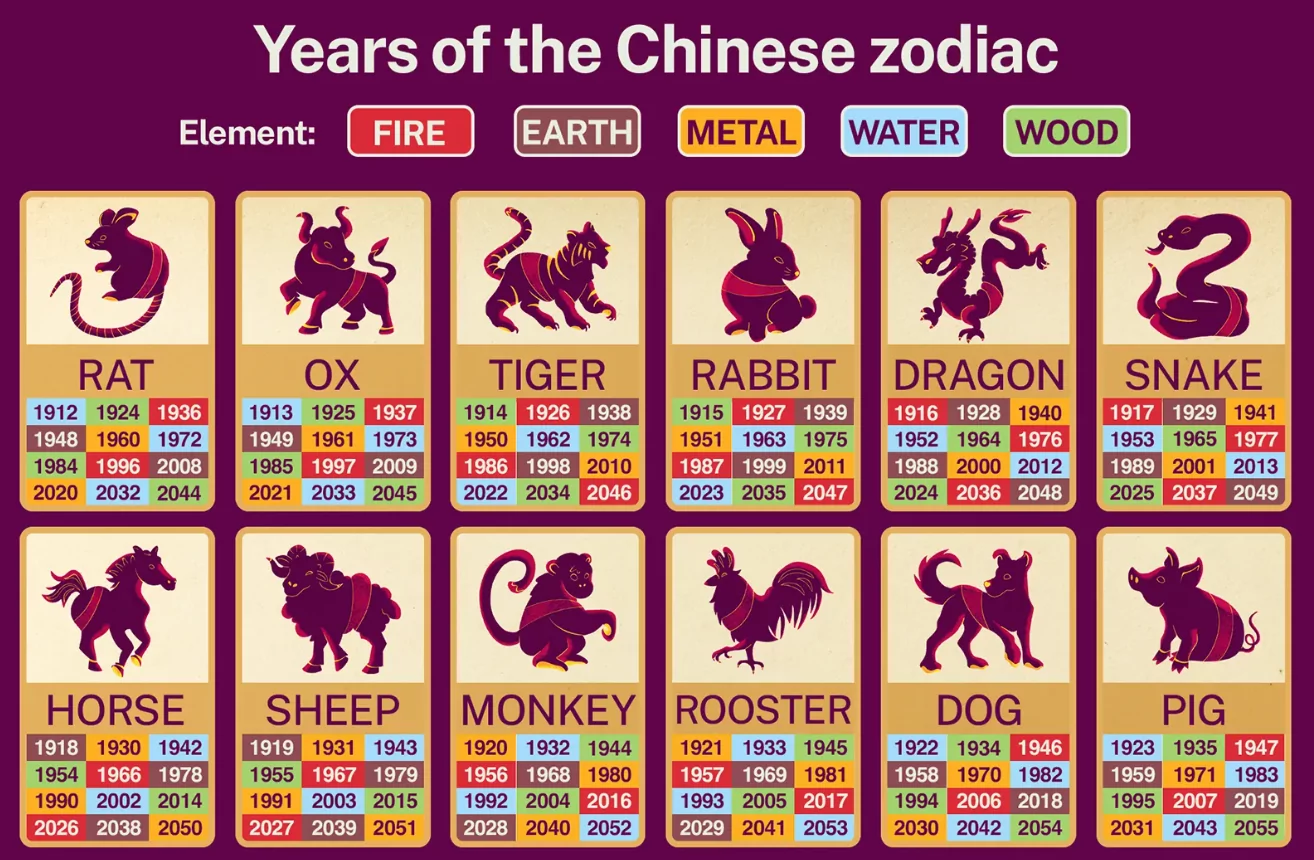
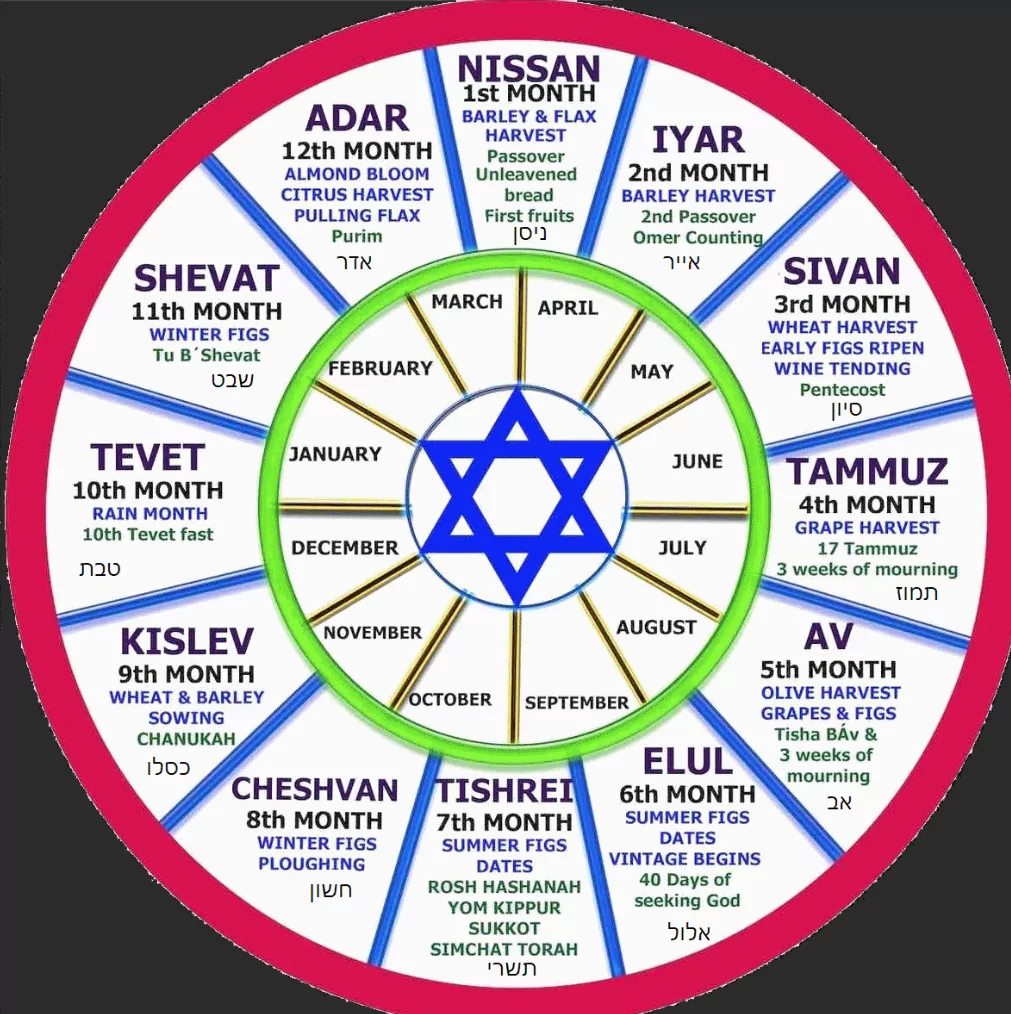
If you have ever tried to calculate the time difference between Bali and New York while sleep-deprived, you know that time math is already tricky. But for developers, historians, and digital nomads building genealogy apps or historical travel guides, basic time zone math is child’s play. What happens when you need to figure out the exact number of days between the fall of the Roman Empire and a rocket launch in 2026? That is where calendar arithmetic with big numbers comes into play.
Computing time intervals over centuries isn’t as simple as just subtracting one year from another and multiplying by 365. You have to account for shifting planetary orbits, historical calendar reforms, and the sheer computational limits of modern programming languages. Let’s dive into the mind-bending world of chronological math and how to calculate massive date durations without breaking your code.
The Problem with Standard Epoch Time
If you are a programmer, your first instinct for finding the difference between two dates is probably to use UNIX time. UNIX time counts the number of seconds that have passed since January 1, 1970 (known as the UNIX Epoch). It’s brilliant for scheduling a Zoom call next week, but it completely falls apart for historical date calculations.
Why? First, traditional 32-bit systems run out of space to store these seconds by the year 2038 (the infamous Y2K38 bug). Second, standard epoch time doesn’t easily handle dates prior to 1970 without dipping into negative numbers, which can cause weird bugs. When computing intervals across millennia, you need a system designed for astronomical timekeeping rather than just server logs.
The 1582 Glitch: The Julian to Gregorian Shift
The biggest trap in century-spanning calendar arithmetic is assuming our current calendar has always existed. It hasn’t. If you write a simple script to calculate the days between October 1, 1582, and November 1, 1582, standard math might give you 31 days. But historically, that’s wrong.
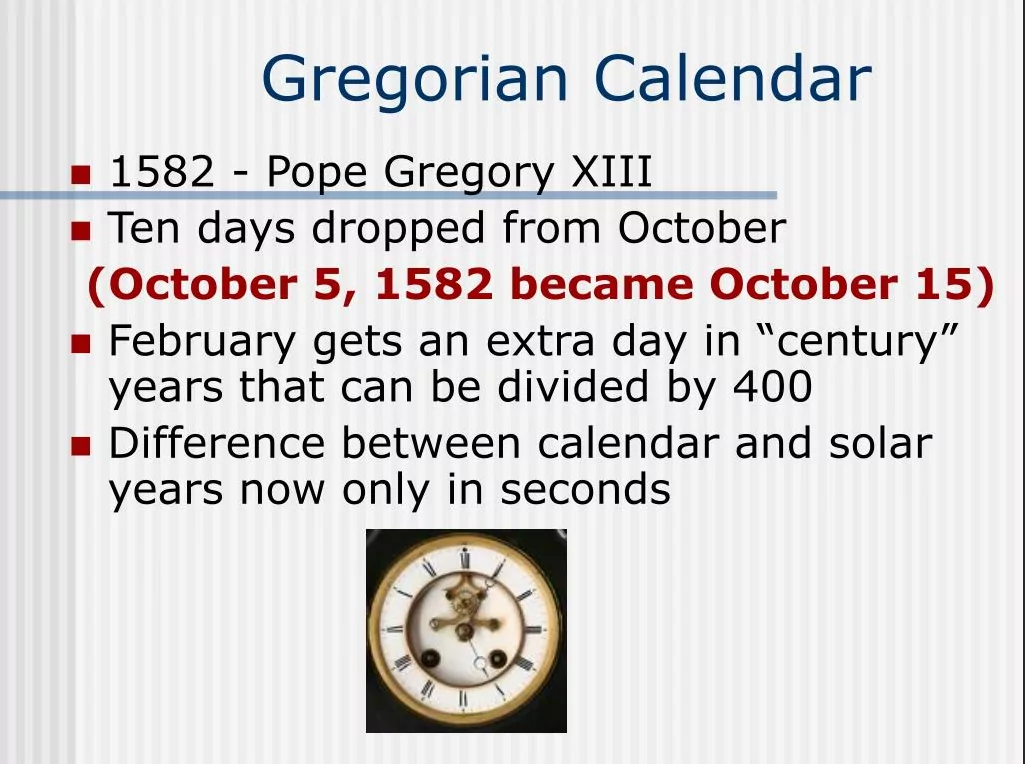
In October 1582, the Gregorian calendar reform took place to fix a drift caused by the older Julian calendar. To catch up with the solar year, Pope Gregory XIII ordered that Thursday, October 4, 1582, would be immediately followed by Friday, October 15, 1582. Ten entire days were just deleted from history! To make matters worse, different countries adopted this change in different centuries. England and its colonies (including what is now the US) didn’t switch until 1752, skipping 11 days. If your algorithm doesn’t account for these missing days, your time intervals will be wildly inaccurate.
The Ultimate Hack: The Julian Day Number (JDN)
So, how do astronomers and developers accurately calculate the exact number of days between two events separated by thousands of years? They abandon months and years entirely and use the Julian Day Number (JDN).
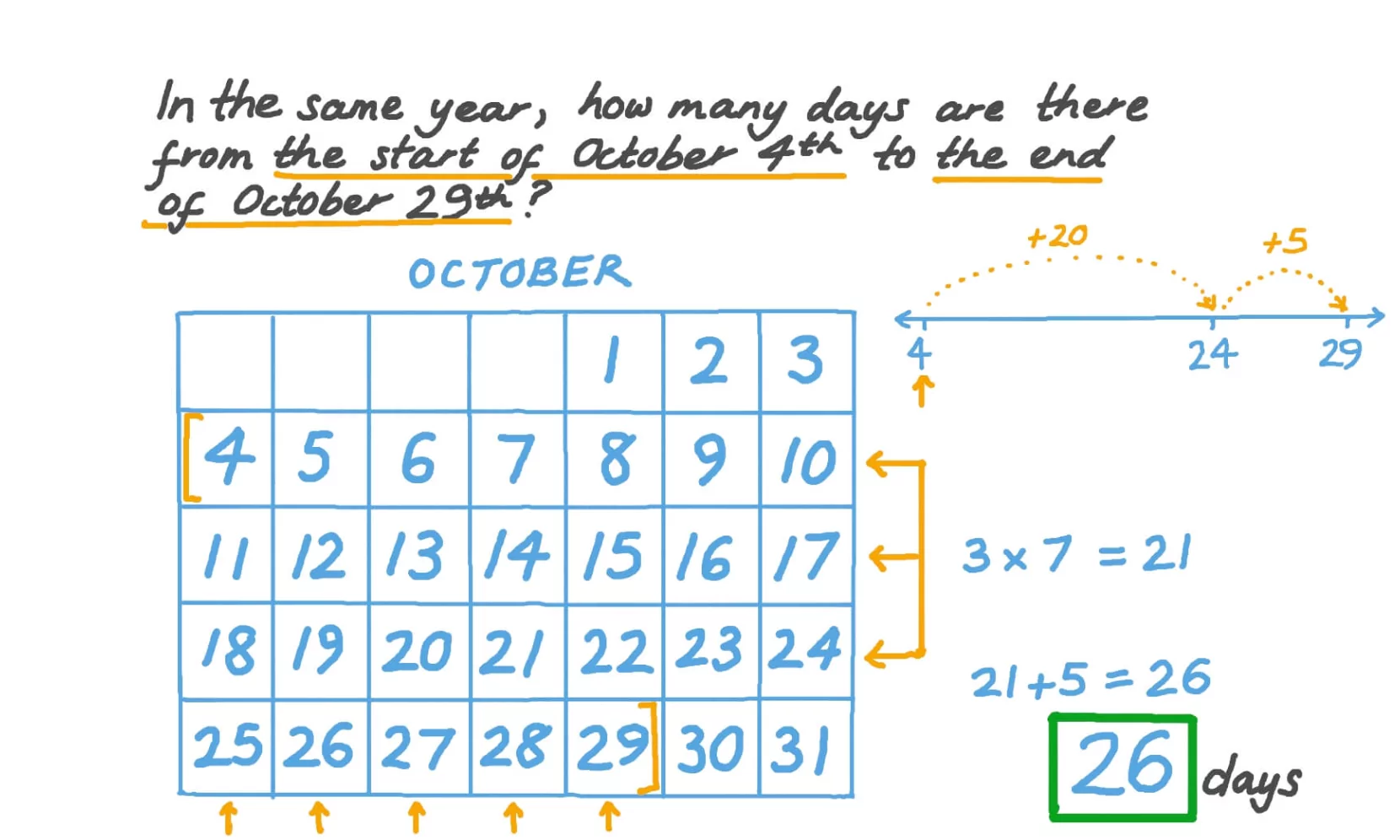
The JDN system assigns a continuous, sequential integer to every single day since January 1, 4713 BC. By converting any historical or future date into a simple integer, finding the exact duration between them becomes a basic subtraction problem. No need to worry about leap years, different month lengths, or missing historical days.
How to Convert Dates to JDN
To compute time intervals programmatically, developers often use the Fliegel and Van Flandern algorithm. It uses a series of integer divisions to reliably translate a Gregorian date (Year, Month, Day) directly into a Julian Day Number. Once both your start date and end date are converted into these massive integers, you simply subtract the smaller number from the larger one to get the precise number of days between them.
Handling Big Integers in Code
When you are calculating seconds, milliseconds, or Julian Days over thousands of years, the numbers get massive very quickly. In older programming environments, these numbers would cause an integer overflow—basically crashing the app because the number was too physically large for the computer’s memory to hold.
Today, if you are coding a historical timeline or doing long-term financial modeling, you have to use specific data types. In JavaScript, for example, you would use BigInt, a built-in object that provides a way to represent whole numbers larger than the standard limit. Python handles large numbers natively, expanding memory automatically to accommodate giant integers. Using these modern tools ensures that when you calculate the seconds between the building of the pyramids and today, your software doesn’t spectacularly crash.
Mastering Chronological Math
Building global applications often means stepping outside the comfort zone of “today, tomorrow, and next week.” Whether you are creating a digital nomad travel tool that tracks visa days across multiple leap years, or an educational platform mapping human history, mastering big number calendar calculations is an incredible skill. By understanding historical calendar shifts and utilizing tools like the Julian Day Number, you can make time travel (at least mathematically) a breeze.