Most of us take our calendar for granted. You open your phone, check the date, and move on with your day. But what if the calendar you were using was so astronomically precise that it outperformed the Gregorian calendar—the system most of the world relies on today—by a significant margin? That’s exactly what the Persian Calendar System has been doing for nearly a thousand years. While the West was still fumbling with calendar reforms, Persian astronomers had already cracked one of the most accurate lunisolar-to-solar transitions in human history.
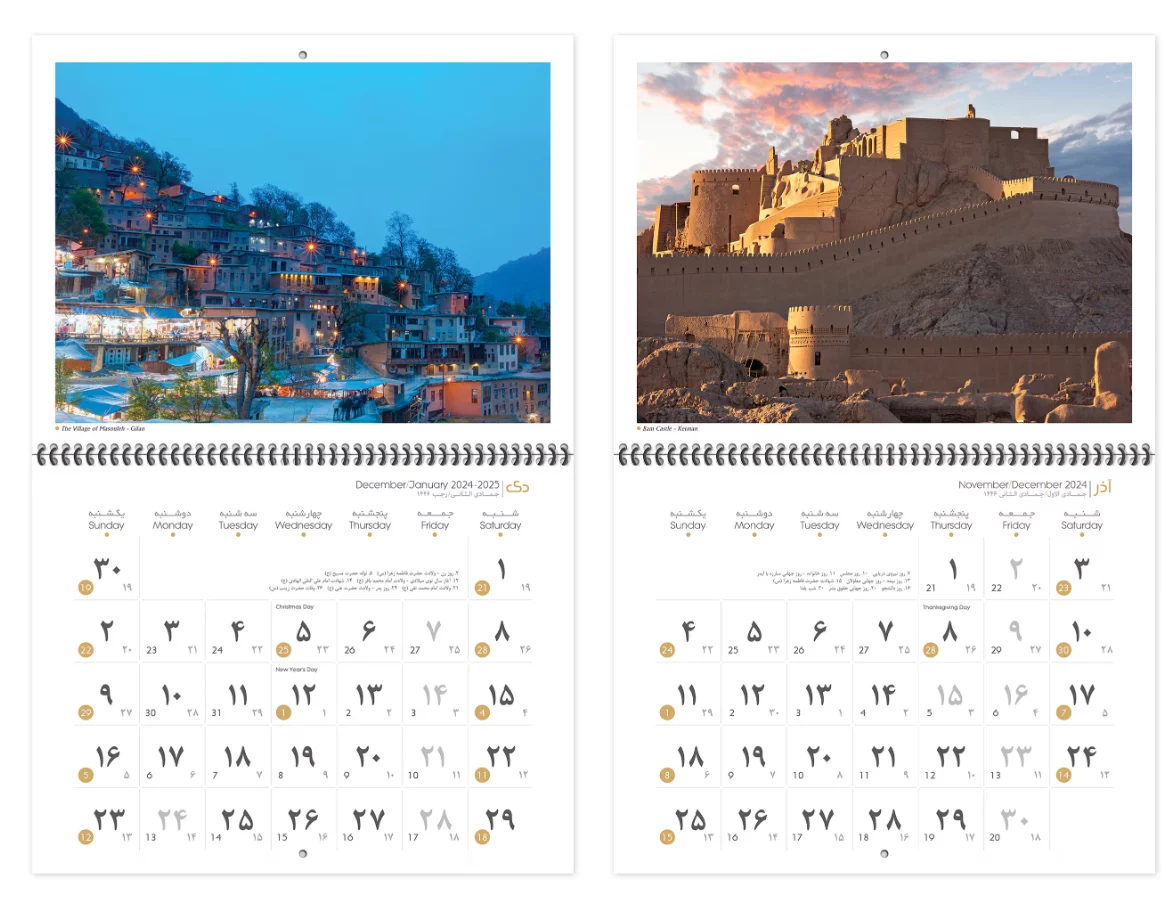
The Solar Hijri calendar, as it is formally known, is the official calendar of Iran and Afghanistan. It is a solar calendar that begins its year on the precise moment of the vernal equinox—the first day of astronomical spring in the Northern Hemisphere. For digital nomads, historians, developers building global scheduling tools, or anyone simply curious about how different cultures track time, the Persian calendar is one of the most fascinating systems ever devised.
A Brief History of the Persian Calendar
The story of the Persian calendar stretches back well over 2,500 years. Ancient Persians had been tracking astronomical cycles long before the modern era. The earliest versions of their calendar were rooted in Zoroastrian religious traditions and followed a system that divided the year into 12 months of 30 days each, with five extra days tacked on at the end—totaling 365 days.

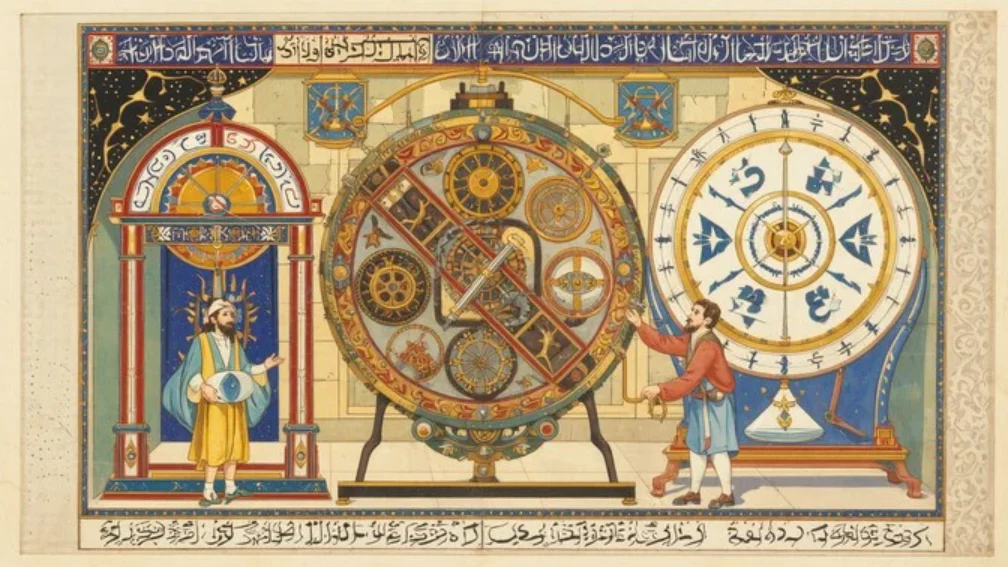
The real revolution, however, came in the 11th century. In 1079 AD, the great Persian poet, mathematician, and astronomer Omar Khayyam led a committee of scholars commissioned by the Seljuk Sultan Malik Shah to reform the calendar. What they produced was extraordinary. The resulting calendar—sometimes called the Jalali calendar after the Sultan’s honorific title Jalal al-Din—calculated the length of the tropical year with stunning accuracy. Their measurement of the solar year was 365.24219858156 days. For reference, today’s most precise scientific measurement is 365.242190 days. Khayyam and his team got it right nearly a thousand years ago using nothing but careful observation and mathematical genius.
How the Persian Calendar System Is Structured
The structure of the Persian calendar system is elegant in its simplicity once you understand the logic behind it. The year is divided into 12 months, each named after Zoroastrian angels and cosmic forces. The first six months—Farvardin, Ordibehesht, Khordad, Tir, Mordad, and Shahrivar—each have 31 days. The next five months—Mehr, Aban, Azar, Dey, and Bahman—have 30 days each. The final month, Esfand, has 29 days in a regular year and 30 days in a leap year.
This structure gives the Persian calendar a total of 365 days in a common year and 366 in a leap year, mirroring the Gregorian calendar in total day count. However, the critical difference lies in how leap years are distributed. While the Gregorian calendar uses a relatively simple rule (divisible by 4, except for century years unless divisible by 400), the Solar Hijri leap year pattern is far more complex and astronomically precise. Instead of following a rigid arithmetic formula, the Persian calendar’s leap years are designed to track the actual position of the Earth relative to the sun, making it a true astronomical calendar rather than a purely mathematical approximation.
The Nowruz Connection: New Year on the Equinox
One of the most beautiful features of the Persian calendar system is that the new year—called Nowruz (meaning “New Day”)—begins at the exact astronomical moment of the vernal equinox. This isn’t a fixed date on the Gregorian calendar; it floats between March 19th, 20th, or 21st depending on the precise timing of the equinox that year.
Nowruz is one of the world’s oldest celebrations, with roots going back at least 3,000 years. It is recognized as a UNESCO Intangible Cultural Heritage and is celebrated by over 300 million people across Iran, Afghanistan, Central Asia, and diaspora communities worldwide. The fact that the entire Persian new year celebration is anchored to an actual astronomical event—not an arbitrary date—speaks volumes about the sophistication of the system behind it. For anyone traveling through Iran or Afghanistan during late March, stumbling upon Nowruz is an unforgettable cultural experience.
Persian Calendar vs. Gregorian Calendar
So how does the Persian calendar stack up against the system most of the world uses today? In terms of pure astronomical accuracy, the Solar Hijri calendar wins. Its connection to the actual solar year through the equinox-based new year means it never drifts from the seasons. The Gregorian calendar, while highly functional for global standardization, introduces a small but measurable drift over thousands of years that requires periodic correction.
From a practical standpoint, the two systems coexist smoothly in modern Iran and Afghanistan. Official government documents, school schedules, and legal records all use the Solar Hijri calendar. Meanwhile, international business, banking, and travel often reference the Gregorian calendar in parallel—similar to how Japan uses both the Gregorian and the imperial Gengo system side by side.
The Persian Calendar in the Digital Age
For developers and tech professionals, supporting the Persian calendar system in applications is increasingly important. With over 80 million people in Iran alone and a large global diaspora, localizing software to properly display Solar Hijri dates is a significant real-world need. Major platforms like Android and iOS have native support for the Persian calendar in their internationalization libraries.
Open-source libraries like moment-jalaali for JavaScript and Python’s jdatetime make it relatively straightforward to convert between Gregorian and Persian dates programmatically. The algorithmic challenge lies primarily in correctly implementing the complex leap year pattern—a task that requires more than a simple modulo operation and demands a deeper understanding of the calendar’s astronomical foundation.
Why the Persian Calendar Still Matters
In a world increasingly dominated by a single global standard, the continued daily use of the Persian calendar system is a remarkable testament to its accuracy and cultural resilience. It isn’t just a historical artifact kept alive out of nostalgia—it is a fully functional, astronomically grounded timekeeping system used by hundreds of millions of people to plan their daily lives, mark their holidays, and connect with a cultural heritage stretching back millennia.
Whether you are a curious traveler, a developer building a globally inclusive app, or simply someone who loves the idea that a team of scholars in 11th-century Persia built something more accurate than what most of the world still uses today, the Persian calendar is a stunning reminder of just how sophisticated ancient human knowledge really was.