The quest to accurately measure and organize time is one of humanity’s oldest intellectual pursuits. From tracking agricultural cycles to coordinating religious festivals, a reliable calendar system has always been fundamental to the organization of human society. The evolution of the calendar is a fascinating journey through astronomy, mathematics, politics, and religion, culminating in the Gregorian calendar, which is now the global standard. This article explores the rich history of calendar systems, tracing their development from the earliest civilizations to the modern era.
🕰️ The Dawn of Timekeeping: Early Civilizations and Lunar Calendars
The earliest attempts at timekeeping were inherently tied to natural, easily observable celestial cycles: the day (solar cycle) and the month (lunar cycle). Most ancient calendars were luni-solar, attempting to reconcile the approximately 29.5-day lunar cycle with the approximately 365.25-day solar year.
Mesopotamia: The Sumerian and Babylonian Influence
The Sumerians in Mesopotamia, around 3100 BC, are credited with one of the oldest formal calendar systems. Their year was divided into 12 lunar months, with each month beginning at the sighting of the new moon. A year of 12 lunar months totaled about 354 days, which is roughly 11 days shorter than a solar year. To prevent their calendar from drifting severely out of sync with the seasons—crucial for agriculture—they periodically inserted an extra intercalary month (a “leap month”). The later Babylonians further refined this luni-solar system, influencing many subsequent calendars in the Near East.
Ancient Egypt: Pioneers of the Solar Calendar
Ancient Egypt provided a crucial leap forward in calendar design by moving away from the complex lunar cycles toward a purely solar calendar. The Egyptians were concerned with predicting the annual flooding of the Nile River, which was vital for their crops. They observed that the heliacal rising of the star Sirius (the ‘Dog Star’) coincided closely with the start of the flood season.
- The 365-Day Year: The Egyptian civil calendar established a year of 365 days, divided into 12 months of 30 days each, plus five extra days—known as epagomenal days—added at the end of the year.
- The Drift Problem: Crucially, the Egyptians did not include a leap day, meaning their calendar was approximately six hours shorter than the true solar year (365.25 days). Over time, this discrepancy caused their calendar to slowly drift relative to the actual seasons, an event that became known as the Sothic Cycle (the cycle’s return to alignment with Sirius).
This early solar calendar laid the groundwork for future Western systems, recognizing the necessity of aligning the calendar with the sun’s cycle for seasonal accuracy.
⚔️ The Roman Calendar and the Julian Reform
The early Roman calendar was notoriously complex and often politically manipulated, leading to significant confusion. Originally, it was a luni-solar system with 10 months, beginning in March. Later, January and February were added, but the calendar still struggled to maintain synchronicity with the seasons, requiring frequent, arbitrary intercalation by priests called the Pontifices Maximus.
The Crisis and the Julian Solution (45 BC)
By the time of Julius Caesar, the Roman calendar was months out of alignment with the actual seasons. In 46 BC, Caesar, after consulting with the Greek astronomer Sosigenes of Alexandria, decreed a complete overhaul. The resulting Julian Calendar, implemented in 45 BC, was one of the most pivotal moments in timekeeping history.
- The Solar Principle: It adopted the 365-day year structure, heavily influenced by the Egyptian model.
- The Leap Year Rule: To account for the extra quarter of a day (0.25), Caesar introduced a simple, groundbreaking rule: a leap day would be added every four years. The average length of the year became $365.25$ days.
- ‘The Year of Confusion’: To correct the existing drift, 46 BC was extended to 445 days, often called the “last year of confusion,” to bring the new calendar into proper alignment.
- Naming Conventions: The Julian calendar also finalized the names of the months, many of which still bear the names of Roman gods, goddesses, and leaders (e.g., July for Julius Caesar).
The Julian calendar was revolutionary for its time and remained the primary calendar system across the Roman Empire and medieval Europe for over 1,600 years. Its adoption laid the foundation for the modern Western calendar structure.
✝️ The Medieval Drift and the Need for Gregorian Reform
While remarkably accurate, the Julian calendar was not perfect. Its average year of 365.25 days was slightly longer than the true astronomical solar year, which is approximately $365.2422$ days. The small difference, $\approx 0.0078$ days (about 11 minutes and 14 seconds) per year, gradually accumulated over the centuries.
- The Accumulating Error: After 16 centuries, the Julian calendar was about 10 days out of sync with the astronomical observations.
- The Easter Problem: This discrepancy became a major issue for the Christian Church, as the date of Easter is tied to the vernal equinox (the start of spring). By the 16th century, the equinox was falling around March 11th, instead of the traditional ecclesiastical date of March 21st. The calculation of the holiest day in the Christian calendar was fundamentally flawed.
🌎 The Modern Standard: Pope Gregory XIII and the Gregorian Calendar
The necessity for reform finally prompted action from the highest religious authority. In 1582, Pope Gregory XIII introduced a new calendar, devised primarily by Italian physician and astronomer Aloysius Lilius and refined by astronomer and mathematician Christopher Clavius. This became known as the Gregorian Calendar.
The Two Key Reforms
The Gregorian reform introduced two critical changes:
1. Correction of the Accumulated Error (The 10-Day Jump):
“Ten days were suppressed from the calendar: the day following Thursday, October 4, 1582, became Friday, October 15, 1582.”
This immediate correction brought the calendar date back into alignment with the vernal equinox.
2. The Modified Leap Year Rule (The Centurial Exception):
To prevent the drift from recurring, the Gregorian calendar refined the leap year rule:
- A year is a leap year if it is exactly divisible by 4,
- EXCEPT for years exactly divisible by 100 (centurial years),
- UNLESS it is exactly divisible by 400.
This means that 1700, 1800, and 1900 were not leap years, but the year 2000 was a leap year. This subtle modification makes the average Gregorian year approximately $365.2425$ days long, which is incredibly close to the true solar year length of $365.2422$ days, resulting in an error of only one day every 3,300 years.
The Slow Adoption of the Gregorian Calendar
The transition to the Gregorian calendar was not immediate. Because the reform originated from the Catholic Church, Protestant, Orthodox, and non-Christian nations were initially hesitant or outright refused to adopt it.
- Immediate Adopters: Catholic countries like Italy, Spain, Portugal, and the Polish-Lithuanian Commonwealth adopted it immediately in 1582.
- Later Adopters: Protestant states, including Great Britain and its American colonies, did not switch until 1752, necessitating an 11-day jump that caused significant social unrest in some areas (e.g., “Give us back our eleven days!”).
- The Last Adopters: Eastern Orthodox countries, resistant to papal authority, were the last to switch. Russia adopted it in 1918 (after the Bolshevik Revolution), and Greece in 1923.
Today, the Gregorian calendar is the world’s most widely accepted civil calendar, serving as the international standard for commerce, communication, and government.
🌍 Other Notable and Contemporary Calendar Systems
While the Gregorian calendar dominates the global civil sphere, many other historically significant and currently used calendars continue to play a crucial role, particularly in religious and cultural contexts.
The Chinese Calendar
The traditional Chinese Calendar is a **luni-solar** system that governs festivals and agricultural practices. It is famous for its 12-year cycle of **Zodiac animals**. Unlike the Gregorian system, the Chinese calendar’s start date (Chinese New Year) varies annually, falling on the second new moon after the winter solstice.
The Hebrew Calendar
The Hebrew Calendar is a sophisticated **luni-solar** calendar used for Jewish religious observances. It operates on a 19-year cycle (**Metonic Cycle**) in which seven leap months are inserted to keep the lunar months aligned with the solar year. The starting point of the calendar is calculated from the biblical creation, often cited as 3761 BC.
The Islamic Calendar (Hijri)
The Islamic Calendar (Hijri calendar) is a purely **lunar calendar**. Its year consists of 12 lunar months, totaling approximately 354 days. Because it does not incorporate any solar correction (no leap month), the Islamic year is about 11 days shorter than the solar year, causing Islamic holidays (like Ramadan and Eid) to cycle through all four seasons over a period of about 33 solar years. It starts from the year of the Prophet Muhammad’s migration (Hijra) in 622 CE.
🔭 The Physics and Math of Time: The Solar Year
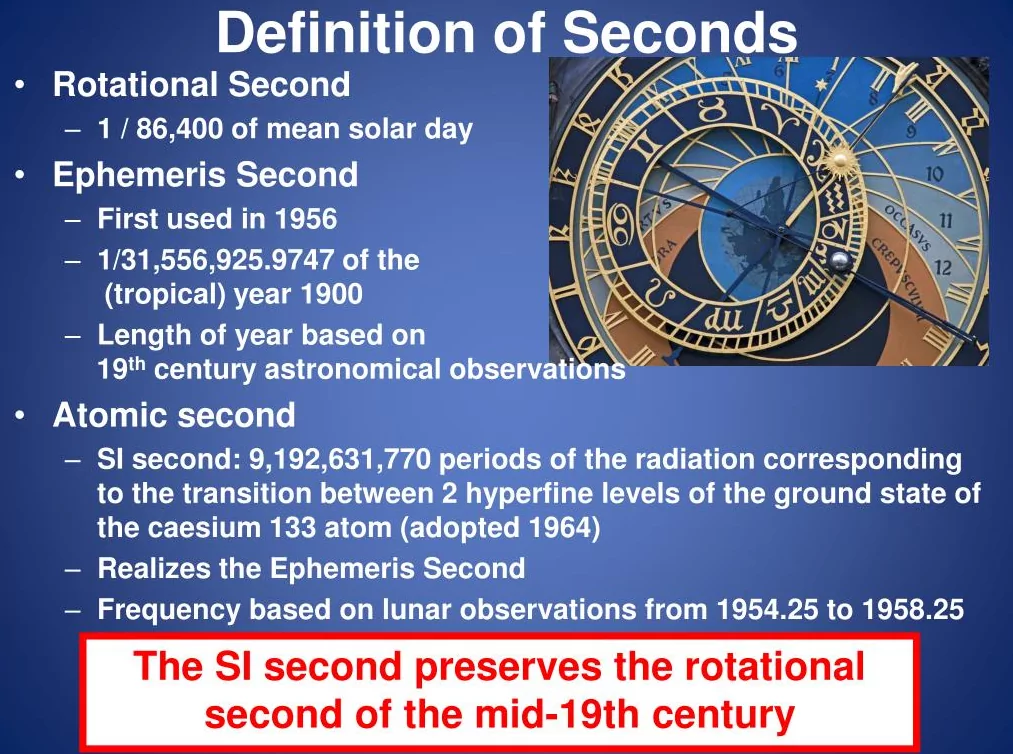
Understanding the fundamental problem of calendar making requires understanding the true length of the year. Astronomers define the most relevant year for calendars, the **tropical year** (the time it takes for the sun to return to the same position in the cycle of seasons, such as the vernal equinox), with high precision:
Tropical Year $\approx 365.24219$ mean solar days.
The Julian calendar’s $365.25$ days and the Gregorian calendar’s $365.2425$ days represent centuries of effort to create a system that is practical, simple, and astronomically accurate. The Gregorian model achieves this by reducing the number of leap days from 100 in 400 years (Julian) to 97 in 400 years (Gregorian).
🌟 Conclusion: A Legacy of Astronomical Precision
The history of calendar systems is a profound reflection of human civilization’s relationship with the cosmos. From the ancient Egyptians’ reliance on the Nile’s flood and the rising of Sirius to the sophisticated centurial corrections of Pope Gregory XIII, each reform was driven by the need for order, prediction, and religious coordination.
The journey from the complex, politically manipulated lunar calendars of early Rome to the solar-based, highly precise **Gregorian calendar** is a testament to the cumulative power of scientific observation and mathematical refinement. The calendar on our walls today is not merely a tool for marking appointments; it is a direct legacy of the astronomical genius that spanned millennia, connecting us to the earliest priests and scholars who first looked to the heavens to impose order on time itself.