In the absence of batteries, quartz crystals, and digital displays, how did ancient civilizations manage to measure the passage of time with accuracy? The answer lies in their acute observation of the cosmos and their ingenious ability to harness natural phenomena—from the shadow cast by the sun to the steady drip of water. The story of ancient timekeeping is a profound blend of astronomy, engineering, and cultural necessity, forming the very foundation upon which modern horology is built. This historical overview explores the primary methods and devices used by early societies to organize their days, seasons, and years.
Harnessing the Sun: Sundials, Obelisks, and Shadow Clocks
The simplest and most direct method of measuring time is by observing the sun’s movement. Early civilizations realized that the length and position of a shadow changed predictably throughout the day, providing the first reliable indicators of time.
The Egyptian Shadow Clock (c. 1500 BCE)
The ancient Egyptians are credited with pioneering the first formal devices to divide the day into smaller parts. The earliest known portable timepiece was the shadow clock (a rudimentary sundial) around 1500 BCE. This device was essentially a flat bar with an elevated cross-bar (gnomon) at one end. In the morning, it was oriented to cast a shadow to the west, and in the afternoon, it was flipped to cast a shadow to the east, dividing the sunlit day into 10 parts, plus two ‘twilight hours’.
Obelisks as Public Timekeepers
Massive stone monuments, particularly the Egyptian obelisks (dating back to 3500 BCE), were used as monumental public sundials. By placing markers around the base of the obelisk, people could track the movement of its shadow. Crucially, the obelisk’s shadow also indicated the changing seasons: the shadow was shortest at noon on the summer solstice and longest on the winter solstice. This allowed them to track not just the time of day, but the time of year—vital for agricultural planning.
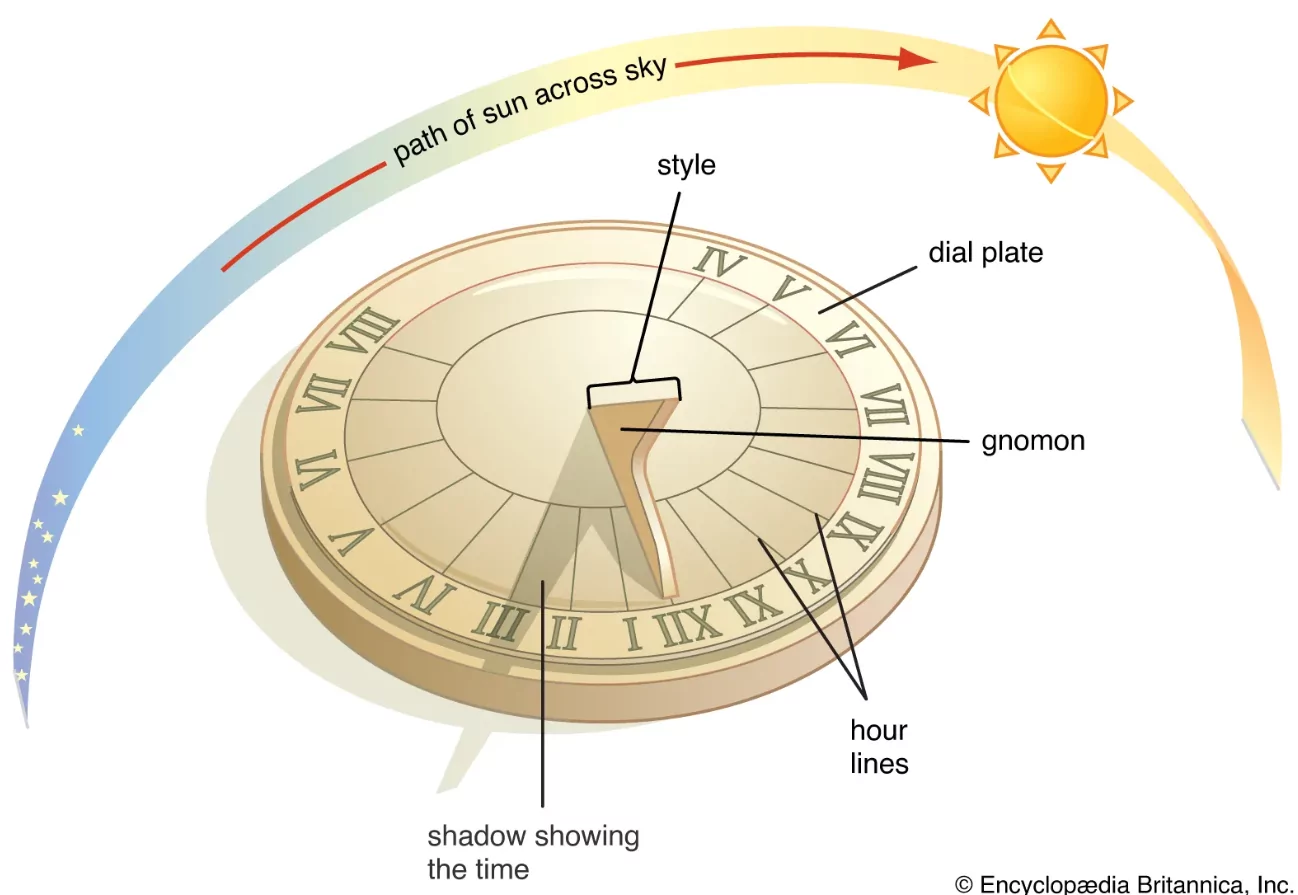
- Functionality: Sundials relied on a central gnomon (the shadow-casting element) to project a shadow onto a marked surface (dial plate).
- Limitations: They were entirely dependent on sunlight, rendering them useless at night or on cloudy days, and the length of the “hour” they measured varied with the seasons (unequal hours).
Mastering the Flow: The Water Clock (Clepsydra)
Recognizing the limitations of sundials, ancient engineers sought a device that could measure time consistently, regardless of daylight. The solution was the water clock, known to the Greeks as the clepsydra (“water thief”).
The Mechanism and Early Use
The earliest physical evidence of a water clock dates back to the tomb of Amenhotep I in Egypt (c. 1500 BCE). The simplest form was an outflow clepsydra: a stone vessel with sloping sides and a small hole near the bottom. Water would drip out at a (theoretically) constant rate, and markings on the inside surface of the vessel measured the passage of time as the water level dropped.
- Night Time Use: The water clock was primarily used to determine hours at night when sundials were useless.
- Judicial Use: In ancient Athens, the clepsydra was crucial for regulating public life, particularly in the law courts, where it was used to limit the speaking time for orators, ensuring fairness in legal proceedings.
- Accuracy Challenge: A major challenge was that as the water level dropped, the water pressure decreased, causing the flow rate to slow down.
Engineering Improvements in the Hellenistic Era
Greek and Roman engineers significantly improved the water clock. Inventors like Ctesibius of Alexandria (3rd Century BCE) created complex inflow clepsydras. These sophisticated devices used a steady input of water to raise a float, which in turn drove indicators, gears, or even automata (moving figures) to display the time. By regulating water pressure, these later models achieved greater consistency, moving the technology toward true mechanical timekeeping.
Celestial Navigation: Tracking Time by the Stars
For centuries, the night sky was the most reliable clock for travelers, priests, and astronomers. The predictable movement of stars and constellations provided a highly accurate, natural time measurement system.
The Egyptian Merkhet (Star Clock)
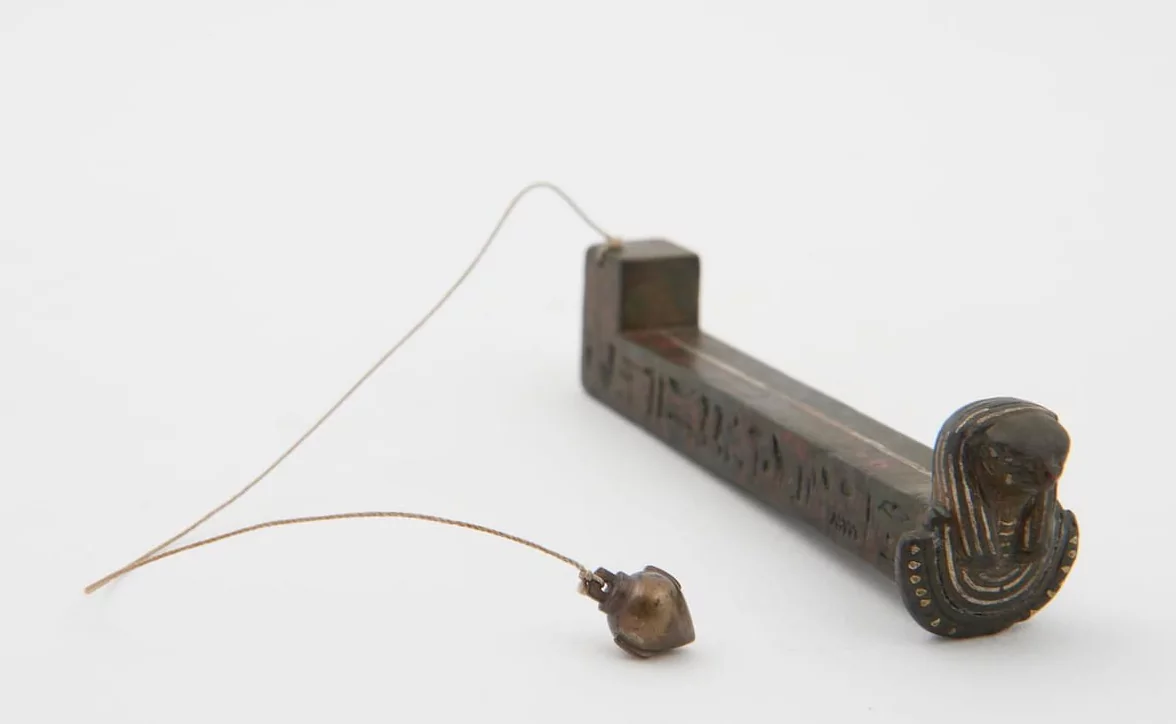
Around 600 BCE, the Egyptians used a sighting tool called the merkhet (meaning “instrument of knowing”). This device, used in conjunction with a plumb line, allowed observers to align a particular star with the North Star and track the star’s movement across the meridian (the north-south line in the sky). As certain stars crossed the meridian at predictable times, the Egyptians could determine the hour of the night. This astronomical method was critical for setting the correct time for rituals and observations.
The Astrolabe and Antikythera Mechanism
The Greeks and later Islamic scholars developed highly sophisticated astronomical instruments:
- Astrolabe: Developed in the Hellenistic period, the astrolabe was a versatile instrument used to identify stars and planets, determine local time given the latitude, and predict celestial positions. It was a foundational tool for astronomy and navigation across the Islamic Golden Age and medieval Europe.
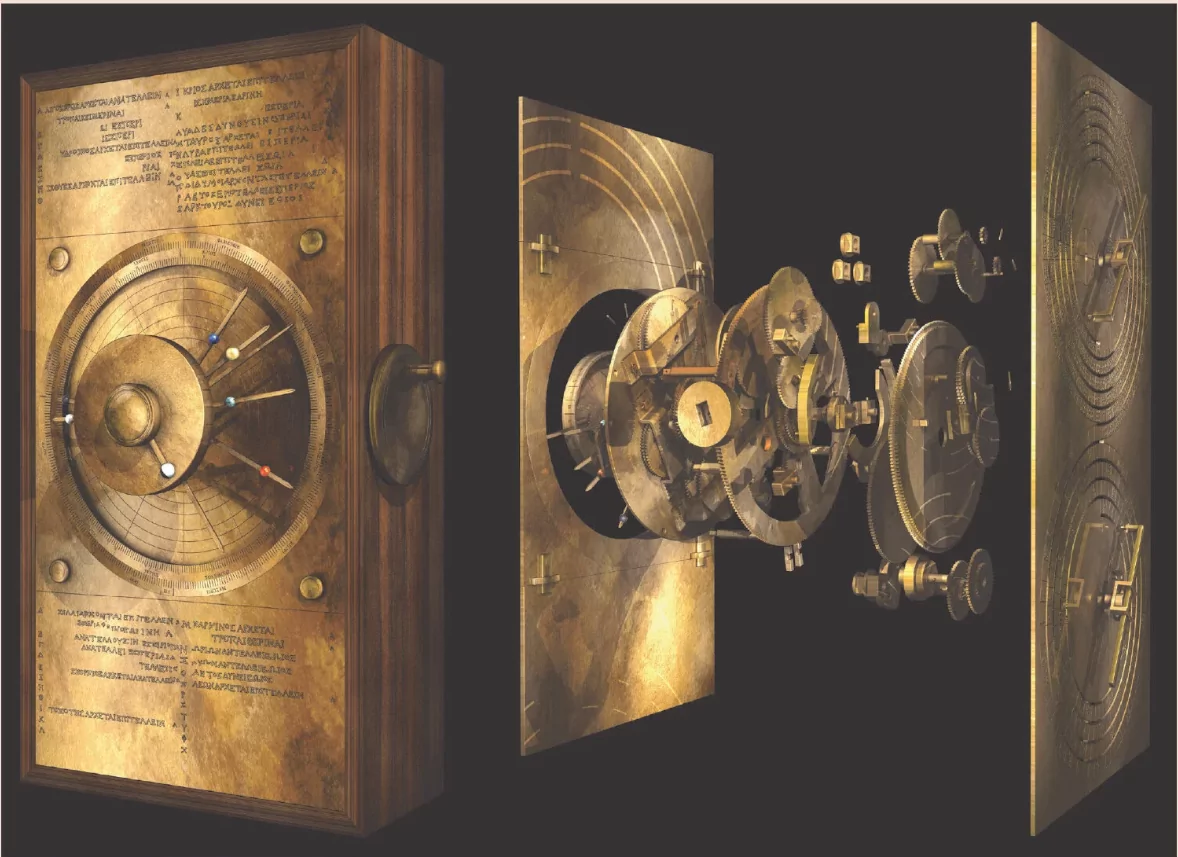
- Antikythera Mechanism (c. 100 BCE): Recovered from a Roman-era shipwreck, this device is often called the world’s first analog computer. It was a complex system of bronze gears used to predict astronomical positions, solar and lunar eclipses, and track the cycles of the calendar with extraordinary mechanical precision, demonstrating a mastery of time and motion far beyond what was previously imagined for the era.
Simpler Methods: Fire, Sand, and Incense Clocks
Beyond the astronomical and hydraulic methods, various other ingenious, simpler devices were developed to measure specific, short intervals of time. These were often used indoors and provided a highly portable solution.
Candle Clocks
A candle clock used a tall, thin candle with marked intervals along its side. As the candle burned, the shrinking height of the wax indicated the passage of a specific period. This method was documented in China as early as the 6th Century CE and reportedly used by King Alfred the Great in England in the 9th century. While susceptible to drafts and variations in wax quality, it provided a simple, self-contained timer, particularly useful for monks and scholars.
Incense Clocks (China and East Asia)
Originating in China, incense clocks provided a gentle, easily observable method of timekeeping. These could be in the form of a stick or a coil of incense powder, marked at intervals. As the incense burned along its path, it measured hours or periods of meditation. In some elaborate designs, burning incense would release small weighted balls, which would drop into a metal tray below, creating a chime to mark the hour.
The Hourglass (Sand-Glass)
The hourglass or sand-glass consisted of two glass bulbs connected by a narrow neck, allowing sand to flow from the upper to the lower chamber at a consistent rate. While less accurate for long-term timekeeping than water clocks, the hourglass was invaluable for its portability and reliability at sea (for navigation) and in churches (for timing sermons) from the 14th century onward. Its self-contained nature meant it was not affected by changing temperatures or the need for a water supply.
Conclusion: The Legacy of Precision
The history of ancient timekeeping is a powerful testament to human ingenuity. Faced with the fundamental challenge of measuring a non-physical phenomenon, civilizations from Egypt and Babylon to Greece and China developed systems that were not only functional but often profoundly interconnected with their religious, agricultural, and political structures.
From the shadow cast by an obelisk to the regulated flow of the clepsydra, these early attempts laid the intellectual and engineering groundwork. They established the concept of standard, measurable intervals of time, paving the way for the invention of the mechanical clock and, eventually, the atomic precision we rely on today. The journey from tracking a moving shadow to measuring the oscillation of an atom is a direct historical line, ensuring that the legacy of these ancient time trackers remains relevant in every tick and tock of modern life.