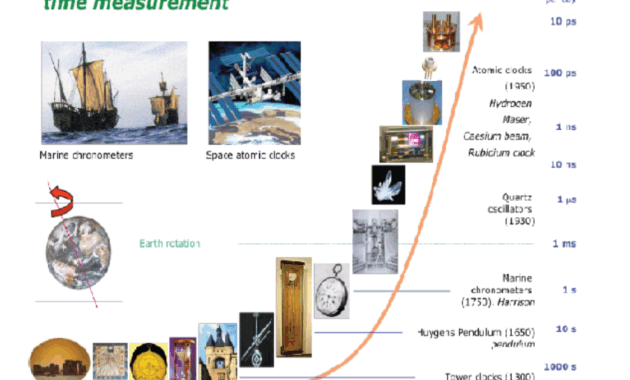
Timekeeping has undergone a profound transformation spanning thousands of years. From ancient sun dials casting shadows to measure hours to today’s atomic clocks keeping nanosecond precision, humanity’s quest to measure time has driven innovation across science, engineering, and culture. This comprehensive article traces the fascinating evolution of timekeeping systems, examining how each advancement solved problems, enabled new capabilities, and ultimately shaped our modern world.
The Earliest Timekeeping: Shadow and Celestial Observation
Sun Dials: The First Clocks
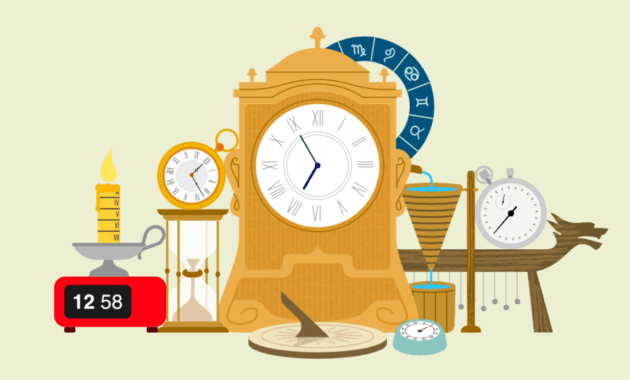
Among the earliest timekeeping devices were sun dials, leveraging the predictable movement of the sun across the sky. Ancient Egyptians and Greeks used simple obelisks and gnomons (angled sticks) to cast shadows on marked surfaces, dividing the day into measurable segments.
- Egyptian Obelisks: Massive stone structures that cast shadows to mark time throughout the day, visible from great distances for coordinating communal activities
- Greek Sun Dials: Refined designs with multiple surfaces to account for seasonal sun angle changes, achieving accuracy previously impossible
- Portable Versions: By Roman times, portable sundials allowed individuals to carry timekeeping capabilities, though still dependent on daylight and clear skies
Water Clocks: Time Flows Continuously
Water clocks, or clepsydras, emerged in ancient Egypt around 1500 BCE, offering an alternative to sun dials that worked at night and during cloudy weather. These ingenious devices used the steady flow of water from one vessel to another to measure time.
- Simplicity and Reliability: Water flows at consistent rates, making water clocks one of the first “machine” timekeepers not dependent on celestial observation
- Refinement: Greek engineers added gears, bells, and mechanisms to water clocks, creating elaborate devices that marked hours mechanically
- Spread Across Civilizations: Water clocks became common in Islamic, Chinese, and Indian cultures, each adding innovations
- Limitations: Accuracy depended on vessel size, water purity, and temperature—variations in water viscosity and evaporation rates introduced errors
Candle and Oil Clocks: Time Burns Away
Ancient and medieval societies used burning candles and oil lamps marked with graduations to measure time. As the candle burned down, passing time could be estimated from the remaining wax or oil.
- Portable and accessible, requiring no machinery or astronomical knowledge
- Inexpensive to produce, making timekeeping available to common people
- Highly inaccurate, affected by room temperature, air currents, and wick quality
Mechanical Clocks: The Revolution in Precision
Early Mechanical Escapements (11th-12th Century)
Medieval engineers developed mechanical escapements—devices allowing clocks to “escape” energy in regulated pulses. This innovation enabled mechanical clocks to keep time without water flow or celestial observation.
- Verge Escapement: An early mechanism allowing weight-driven gears to move in measured steps, enabling the first true mechanical clocks around 1000 CE
- Accuracy Improvement: Mechanical clocks reduced error from hours daily to minutes daily—revolutionary precision by medieval standards
- Church Installations: Bell towers in European cathedrals became the first public timekeeping institutions, synchronizing communities through automated chiming
Pendulum Clocks: Seventeenth-Century Breakthrough (1656)
Galileo’s observation that a swinging chandelier maintained consistent oscillation frequency led to pendulum clock development by Christiaan Huygens. Pendulums provided unprecedented regularity in mechanical timekeeping.
- Precision Achievement: Pendulum clocks accurate to within 10 seconds daily—a 100-fold improvement over previous mechanical designs
- Scientific Advancement: These clocks enabled precise experiments in physics, astronomy, and mathematics, directly supporting the Scientific Revolution
- Standardization: Accurate pendulum clocks allowed scientists worldwide to synchronize observations, advancing scientific collaboration
Spring-Driven Portable Clocks (15th-17th Centuries)
The development of coiled springs as energy sources allowed clocks to become portable. Unlike weight-driven mechanisms requiring stable mounting, spring-driven clocks could travel with individuals.
- Enabled personal timekeeping independent of location
- Initially expensive and inaccurate due to spring force variation
- Led eventually to pocket watch development in the 17th-18th centuries
Pocket Watches and Wristwatches: Personal Timekeeping
Pocket Watches: The First Mass-Produced Timekeepers
As spring technology matured and manufacturing improved, pocket watches became status symbols among the wealthy during the 17th-18th centuries. They represented the first widely available personal timekeeping devices.
- Transformed time from communal (church bells) to personal
- High cost limited ownership to aristocracy and wealthy merchants
- Enabled punctuality culture, changing professional and social expectations
Wristwatches: Making Time Mobile (Late 1800s-1900s)
While pocket watches dominated the 1800s, practical demands—particularly from military use and sports—drove development of wristwatches. Initially marketed as ladies’ jewelry, wristwatches proved superior for active lifestyles.
- Military Adoption: Army officers during World War I found wristwatches superior to pocket watches for combat coordination
- Social Shift: Wristwatches became the standard by the 1920s as masculinity norms evolved and practicality proved undeniable
- Mass Production: Industrial manufacturing made wristwatches affordable to middle-class populations
Electronic and Quartz Revolution: Twentieth-Century Transformation
Electric Clocks (1920s-1950s)
Electric motors provided another energy alternative to weights and springs. Electric clocks maintained synchronization with alternating current frequency, offering consistent timing independent of mechanical wear.
- Eliminated need for winding or weight replacement
- Radio stations and power companies used standardized alternating current to synchronize national timekeeping
- Enabled synchronized transmission of radio and television broadcasts
Quartz Watches: The Quartz Crisis (1970s)
The development of quartz crystals that vibrate at precise frequencies revolutionized timekeeping. Quartz watches proved dramatically more accurate, more durable, and significantly cheaper than mechanical alternatives.
- Accuracy: Accurate to within seconds annually—thousands of times more precise than mechanical watches
- Disruption: Japanese quartz watches virtually eliminated the Swiss mechanical watch industry in what became known as the “Quartz Crisis”
- Mass Adoption: Affordable quartz watches became ubiquitous by the 1980s, democratizing accurate personal timekeeping globally
- Affordability: Manufacturing costs dropped dramatically, making quality timepieces accessible to nearly every economic segment
Digital Timekeeping: The Digital Age
Digital Clocks and Watches (1970s-1980s)
Electronic displays showing time numerically replaced analog clock faces. Digital formats enabled integration with other electronic systems and provided easier readability compared to interpreting minute and hour hands.
- LCD and LED displays eliminated mechanical wear entirely
- Easier readability for people with vision challenges
- Enabled integration with calendars, alarms, and other electronic functions
- Initially powered by batteries, later by solar cells and kinetic energy
Computer Timekeeping: Standardized Synchronization (1980s-2000s)
As computers became central to society, synchronized timekeeping across networks became essential. Network Time Protocol (NTP) and Coordinated Universal Time (UTC) enabled global synchronization of digital systems.
- Financial transactions required microsecond-level synchronization
- Telecommunications networks coordinated across time zones through standardized atomic time
- Satellite systems (GPS) depended on precise atomic clocks for accurate positioning
Atomic Clocks: Precision Beyond Mechanical Limits
Development and Breakthrough (1950s-1960s)
Atomic clocks use oscillations of atoms or molecules to measure time, achieving precision impossible mechanically. Cesium atomic clocks became the international standard for defining the second itself.
- Cesium-133 Standard: The second is now officially defined as 9,192,631,770 oscillations of cesium-133 atoms
- Accuracy Achievement: Accurate to within one second every 15 million years—precision exceeding any mechanical alternative by factors of millions
- Global Coordination: International timekeeping agencies maintain atomic clocks ensuring worldwide time synchronization within microseconds
Applications and Impact
- GPS satellites depend on atomic clocks for precise positioning (one nanosecond error = 30 cm positioning error)
- Financial markets execute trades coordinated to microsecond precision
- Telecommunications networks synchronize data transmission across continents
- Scientific experiments achieve reproducibility through synchronized measurements
Smartphone and Cloud Timekeeping: Integration and Ubiquity (2000s-Present)
Automatic Time Synchronization
Modern smartphones synchronize time automatically with cloud servers and network time protocols. Users rarely need to manually adjust device time—synchronization happens transparently in the background.
- Time automatically updates when traveling between time zones
- Synchronized calendar and notification systems depend on precise timestamping
- Payment systems, social media, and email rely on accurate time ordering of events
Wearable and IoT Timekeeping
Smartwatches, fitness trackers, and connected devices distribute timekeeping across personal networks. Time synchronization extends beyond individual devices to entire ecosystems of sensors and systems.
- Fitness trackers timestamp health data for trend analysis
- Smart home systems coordinate automated events across multiple devices
- IoT networks synchronize sensor readings for coordinated environmental monitoring
The Future: Quantum Clocks and Relativistic Precision
Optical Lattice Clocks
Emerging quantum clocks using optical lattices achieve even greater precision than cesium clocks. These systems could redefine the second based on even more stable atomic transitions.
- Accurate to within one second every 15 billion years (age of universe)
- Enable detection of relativistic effects in timekeeping—time literally passes at different rates at different altitudes
- Support next-generation navigation systems surpassing GPS accuracy
Distributed Timekeeping Networks
Future timekeeping may involve distributed quantum clocks synchronized across global networks, enabling unprecedented coordination of complex systems.
Cultural Impact: How Timekeeping Changed Civilization
The Birth of Punctuality Culture
Widespread personal timekeeping created expectations for punctuality. Before portable clocks, schedules were approximate. Modern civilization depends on synchronized activities and meeting specific times.
Industrial Revolution and Factory Discipline
Accurate timekeeping enabled factory shift work, train schedules, and coordinated labor. Standardized time became essential infrastructure for industrial production.
Global Synchronization
Time zones and standardized Coordinated Universal Time (UTC) allowed global commerce, communication, and coordination. International finance, telecommunications, and scientific collaboration depend on this framework.
Conclusion: From Shadow to Nanoseconds
The evolution from sun dials to atomic clocks represents humanity’s continuous quest for precision and coordination. Each innovation—from water clocks to pendulums to quartz to atomic standards—solved contemporary problems and enabled new possibilities. Today’s nanosecond-precise networks represent the culmination of millennia of innovation. Yet the fundamental purpose remains unchanged: helping humans coordinate activities, meet obligations, and understand the world with increasing precision. As quantum clocks approach theoretical limits, future generations will likely develop timekeeping systems we can barely imagine, continuing this ancient and essential human endeavor.