If you thought figuring out the date of Easter was a headache, wait until you try to pin down Passover. For digital nomads scheduling travel around global holidays, or developers building comprehensive calendar apps, the Jewish calendar presents a fascinating—and highly complex—mathematical challenge. Because the Jewish calendar is a lunisolar system, it relies on both the phases of the moon and the solar year. This means Jewish holiday calculations aren’t just a matter of adding 365 days; they require a deep dive into ancient astronomy and strict mathematical rules.
So, how exactly do you figure out when Passover starts without just Googling it every year? Whether you’re planning a trip to Israel or trying to code a global holiday API, understanding how to calculate Passover mathematically is a masterclass in ancient timekeeping meeting modern logic.
The Lunisolar Puzzle: Why Passover Moves
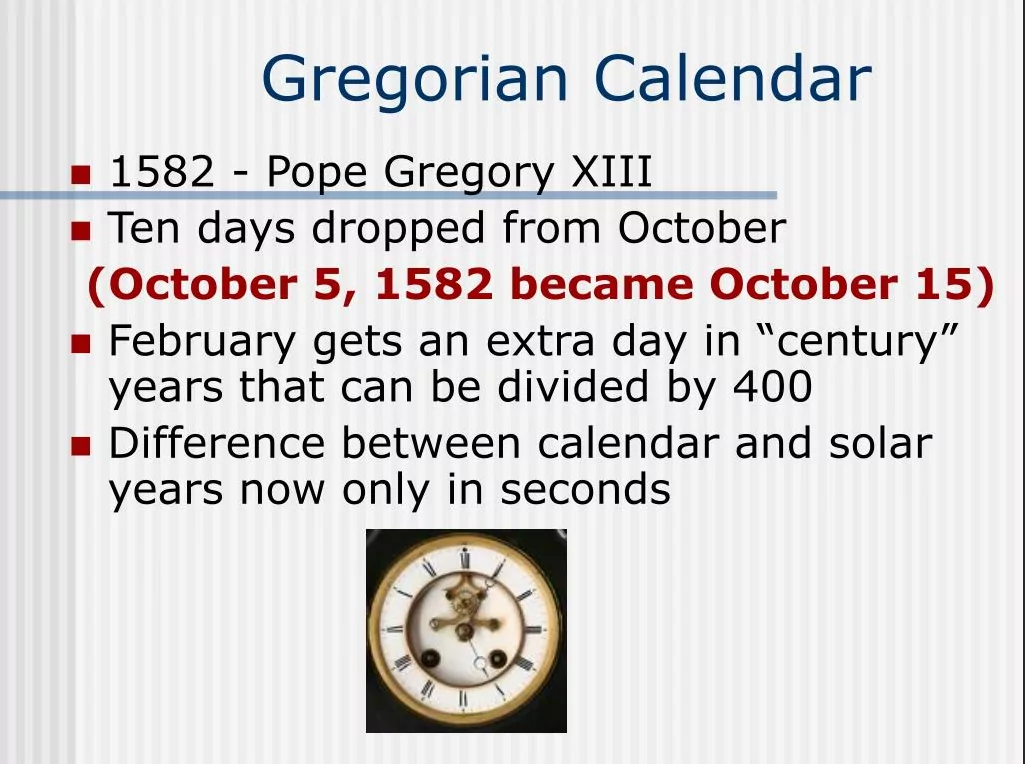
The Gregorian calendar (the one most of the world uses for daily business) is strictly solar. It takes the Earth about 365.24 days to orbit the sun. The Jewish calendar, however, is lunisolar. A lunar month (the time between new moons) is roughly 29.5 days. A lunar year of 12 months is only about 354 days long—roughly 11 days shorter than a solar year.
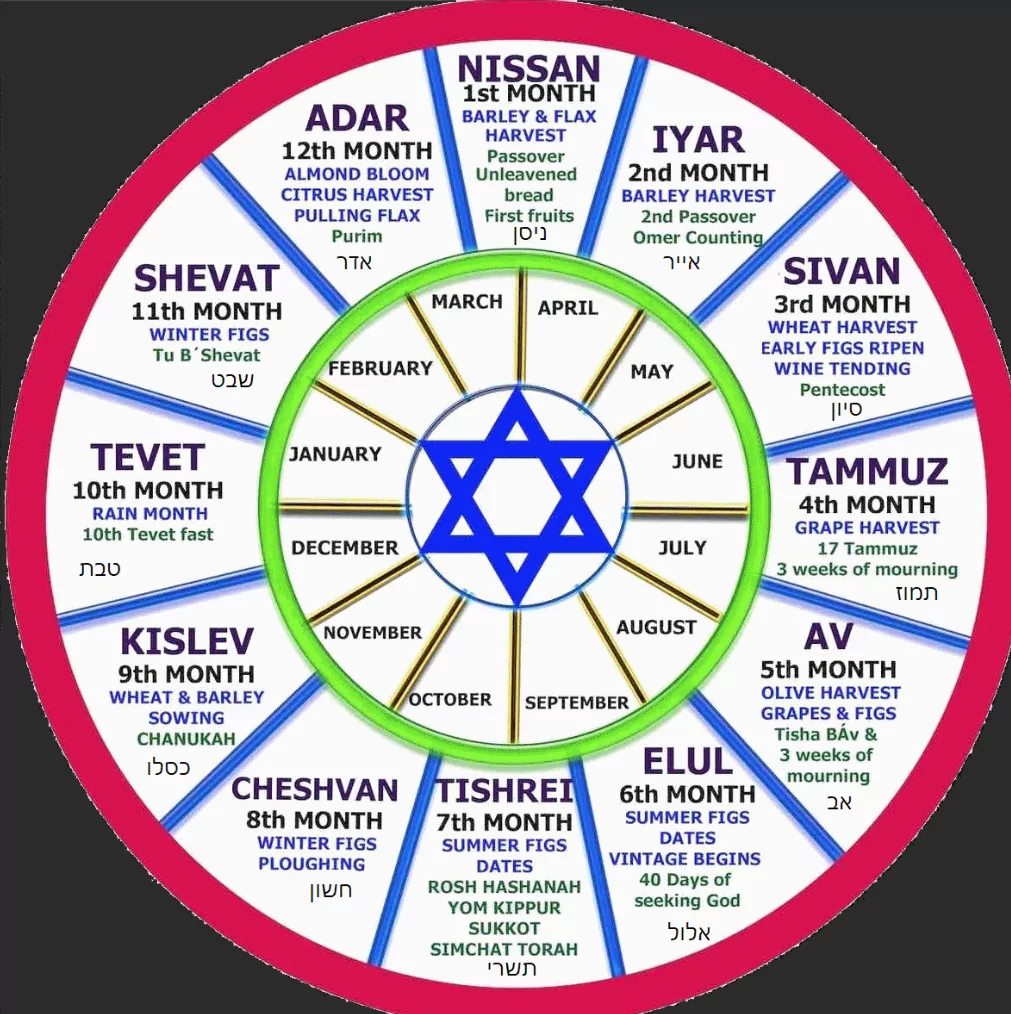
If the Jewish calendar didn’t adjust for this 11-day difference, holidays like Passover (Pesach) would drift backward through the seasons. Passover, which celebrates the Israelites’ exodus from Egypt, is biblically mandated to occur in the spring (specifically in the Hebrew month of Nisan). To keep Passover in the spring, the Jewish calendar uses a brilliant mathematical fix: the leap month.
The 19-Year Metonic Cycle
The secret weapon in calculating Jewish holidays is the Metonic cycle. Ancient astronomers discovered that 19 solar years are almost exactly equal to 235 lunar months. This 19-year cycle is the backbone of the Hebrew calendar.
To keep the lunar calendar aligned with the solar year, seven leap months (an extra month called Adar I) are added during this 19-year cycle. Specifically, the leap years occur in the 3rd, 6th, 8th, 11th, 14th, 17th, and 19th years of the cycle. This mathematical adjustment ensures that the 15th of Nisan—the start of Passover—always falls in the spring.
The Rules of Postponement (Dehiyyot)
If the Metonic cycle was the only rule, coding a Passover calculator would be relatively simple. However, the Hebrew calendar has strict rules, known as Dehiyyot (postponements), designed to prevent certain holidays from falling on specific days of the week, primarily to avoid conflicts with the Sabbath (Shabbat).
For example, the first day of Rosh Hashanah (the Jewish New Year) can never fall on a Sunday, Wednesday, or Friday. Because the length of the year is fixed, adjusting Rosh Hashanah directly impacts the date of Passover in the following spring. These postponement rules mean a Jewish year can have six different lengths: 353, 354, or 355 days in a regular year, and 383, 384, or 385 days in a leap year.
Calculating Passover Programmatically
Because of the complex interplay between the lunar cycle, the 19-year leap year pattern, and the Dehiyyot rules, calculating Passover from scratch requires some heavy mathematical lifting. However, the foundational algorithm most developers use is based on the calculations established by Hillel II in the 4th century.
Here is a simplified overview of the programmatic approach to finding the Gregorian date for Passover:
- Find the Jewish Year: Add 3760 to the Gregorian year (e.g., 2026 + 3760 = 5786). This calculation applies for the spring (when Passover occurs).
- Determine the Year in the Cycle: Calculate the Jewish year modulo 19. This tells you where the year falls in the Metonic cycle and whether it’s a leap year.
- Calculate the Molad: The Molad is the precise astronomical time of the new moon. You must calculate the Molad for the month of Tishrei (Rosh Hashanah) of that year.
- Apply the Dehiyyot: Apply the four rules of postponement to the Molad of Tishrei to find the exact day Rosh Hashanah begins.
- Count Forward to Nisan: Once you have the precise date of Rosh Hashanah, you count forward. In a regular year, Passover (15 Nisan) is 163 days after Rosh Hashanah. In a leap year, it is 193 days after.
The Gauss Algorithm for Passover
Just like with Easter, the famous mathematician Carl Friedrich Gauss developed an algorithm specifically to calculate the Gregorian date of the first day of Passover without having to build out the entire Hebrew calendar logic from scratch. While Gauss’s original formula had a few bugs that were later corrected by others, modern variations of this algorithm are widely used in programming libraries today.
Gauss’s approach uses a series of complex modulo operations to bypass the need to calculate the exact Molad and apply the Dehiyyot manually, directly outputting the Gregorian date in March or April.
Building Reliable Calendar Tools
For developers creating travel booking platforms or global scheduling tools for remote teams, manually coding the rules of the Hebrew calendar is prone to edge-case errors. Most developers rely on established, open-source libraries (like `hebcal` in JavaScript or Python) that have already battle-tested these intricate mathematical formulas.
Understanding the math behind Passover isn’t just about writing code; it’s about appreciating a millennia-old system that successfully married human observation of the cosmos with strict religious requirements long before computers existed.