If you’ve ever tried to plan a spring trip or schedule a massive project launch around the holidays, you’ve probably noticed something incredibly frustrating: Easter refuses to stay put. Unlike Christmas or Halloween, which are locked into specific dates, Easter bounces around the calendar like a pinball. One year it’s in late March, the next it’s pushing into late April. For a digital nomad trying to nail down flights, or a developer trying to build a reliable calendar app, figuring out how to calculate Easter algorithmically is a genuine puzzle.
The reason for this shifting date is deeply rooted in history and astronomy, blending lunar cycles with the spring equinox. But if you want to find Easter programmatically without manually checking a religious calendar every single year, you don’t need a telescope—you just need a solid algorithm.

Why Is Easter So Hard to Pin Down?
To understand the math, you first have to understand the rule. The general guideline established centuries ago by the Council of Nicaea (way back in 325 AD) is that Easter Sunday falls on the first Sunday after the first full moon that occurs on or after the vernal equinox (the first day of spring in the Northern Hemisphere). Oh, and if that full moon happens on a Sunday, Easter is pushed to the following Sunday.
Trying to code that logic from scratch involves predicting lunar phases and adjusting for leap years. It’s a headache. Thankfully, some incredibly smart mathematicians have already done the heavy lifting, creating formulas that spit out the exact date of Easter Sunday based solely on the year.
The Computus: The Ancient Art of Finding Easter
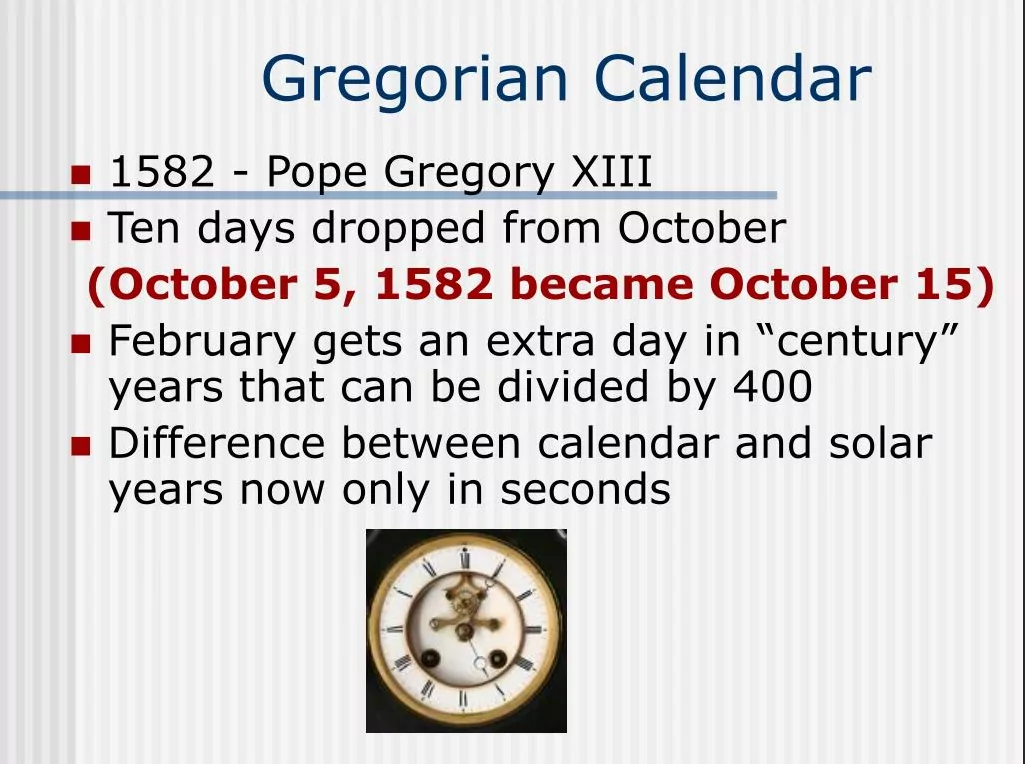
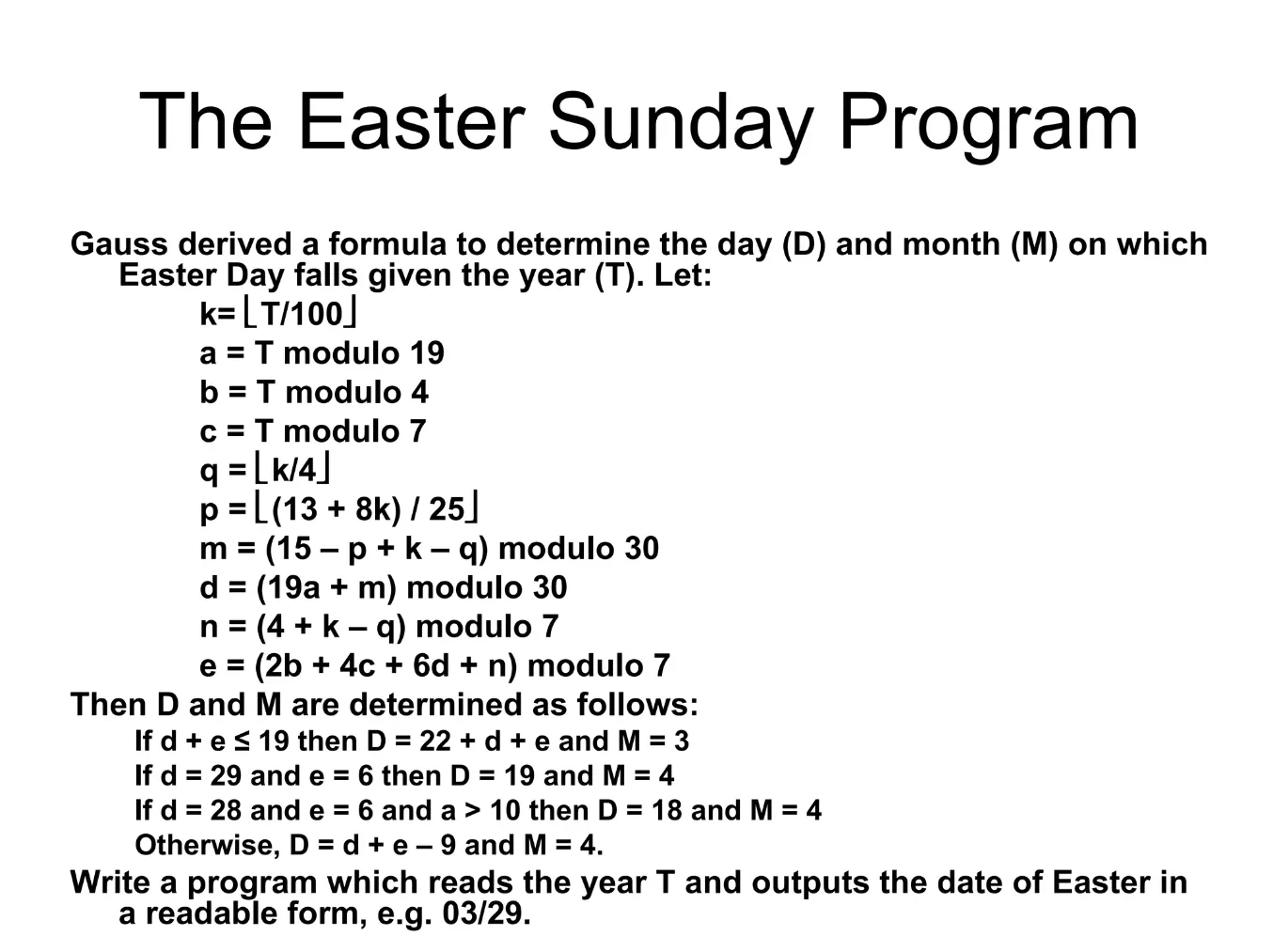
The calculation of Easter is formally known as the Computus. Over the centuries, several algorithms have been developed to handle this complex calendar calculation. The goal of any good Easter algorithm is to take a given year (like 2026) and return a specific month and day for the Gregorian calendar (the calendar most of the world uses today).
While there are a few variations, the most famous and widely used method in modern programming was developed in the 19th century and is often attributed to the mathematician Carl Friedrich Gauss, though an anonymous correspondent published a more streamlined version in the journal Nature in 1876.
Meeus/Jones/Butcher Algorithm: The Developer’s Best Friend
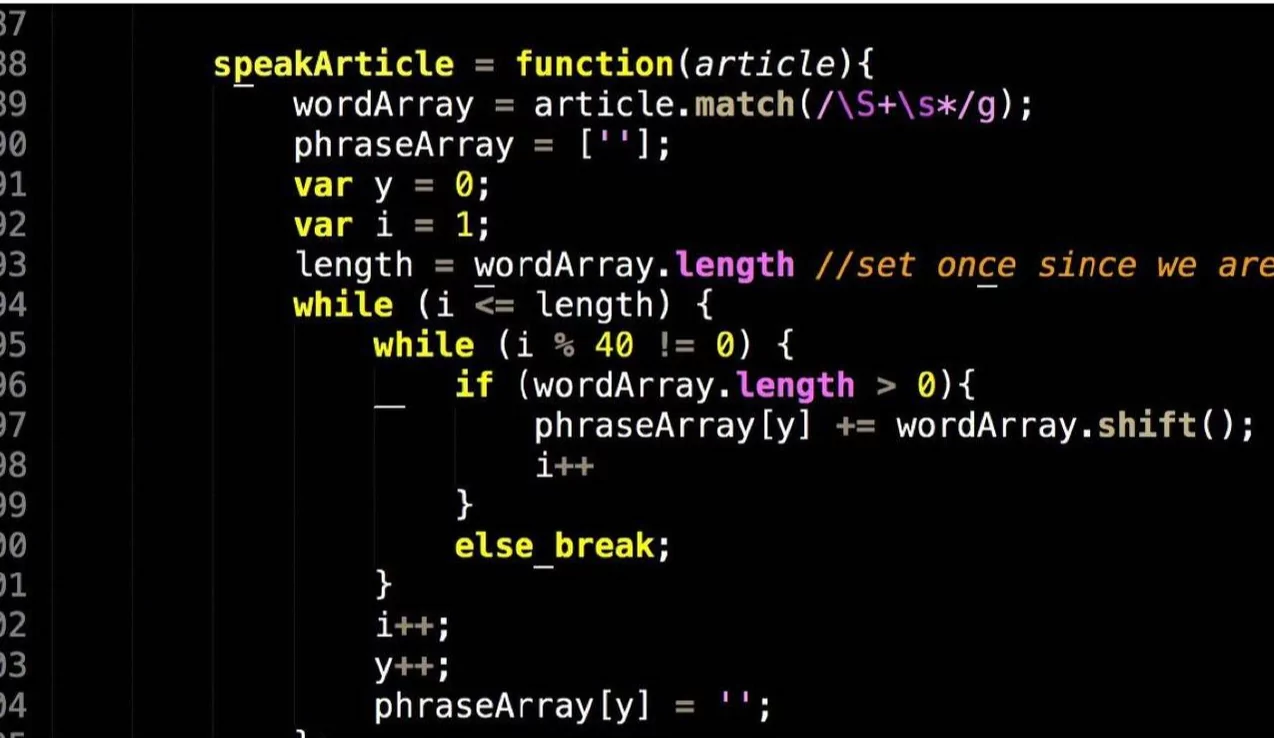
If you are writing code in Python, JavaScript, or C++, you don’t want to mess around with abstract astronomical concepts. You want a straightforward, mathematical formula. The Meeus/Jones/Butcher algorithm (often just called the “Anonymous Gregorian algorithm”) is the gold standard for finding the date of Easter programmatically. It works entirely through a series of integer division and modulo operations.
Here is a breakdown of the mathematical steps to find Easter for any given year (let’s call the year Y). Don’t worry if it looks like alphabet soup; in programming, these are just basic variables:
- Calculate the lunar cycle position:
a = Y % 19 - Find the century:
b = Y / 100andc = Y % 100 - Adjust for leap years in the century:
d = b / 4ande = b % 4 - Calculate the lunar orbit correction:
f = (b + 8) / 25 - Find the solar/lunar sync (the Epact):
g = (b - f + 1) / 3 - Determine the date of the Paschal Full Moon:
h = (19 * a + b - d - g + 15) % 30 - Calculate adjustments for leap years (days):
i = c / 4andk = c % 4 - Find the day of the week:
L = (32 + 2 * e + 2 * i - h - k) % 7 - Make final adjustments to prevent edge cases:
m = (a + 11 * h + 22 * L) / 451
The Final Result: Month and Day
Once you have crunched all those numbers, determining the actual month and day is surprisingly simple:
Month: (h + L - 7 * m + 114) / 31
Day: ((h + L - 7 * m + 114) % 31) + 1
If the month variable outputs ‘3’, Easter is in March. If it outputs ‘4’, Easter is in April. The day variable gives you the exact date. This algorithm is flawless for any year in the Gregorian calendar and is incredibly lightweight to run in any software application.
Putting It Into Practice
Whether you’re building a travel planning app to help nomads book flights around holiday price surges, or you’re just writing a script to automate your personal schedule, implementing a solid Easter algorithm saves you from ever having to manually hardcode holiday dates again.
By relying on mathematical consistency rather than complex astronomical observations, developers can easily tame one of the most unpredictable holidays on the calendar.