The Inca Empire mastered time without writing, using knotted cords called quipus and sky-aligned architecture to track seasons, festivals, and empire-wide activities. Spanning from Colombia to Chile, their system synchronized 12 million people through precise solar-lunar observations and ingenious record-keeping. This guide reveals how quipus encoded calendars while sites like Machu Picchu functioned as living observatories.
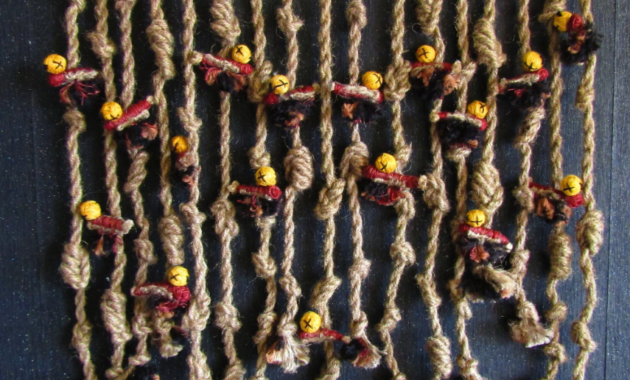
Quipu: The Knotted Backbone of Inca Time Records
Quipus—strings with colored cords and knots in decimal positions—stored numerical data including census, tributes, and calendars. Main cords hung primary strings grouped by color (red for military, yellow for gold), knots denoting units: single loop (10), figure-eight (100). Khipukamayocs memorized contextual meanings, turning quipus into dynamic ledgers.
Calendrical quipus tracked lunar months (29-30 days) via knot clusters, with 15 red-green pairs signaling solar adjustments. A 17th-century Miccinelli quipu matches Cusco’s 1532 conquest year events, confirming astronomical encoding. These portable devices enabled administrators to audit harvests timed to ceque paths.
Ceques: Sacred Landscape Calendar Lines
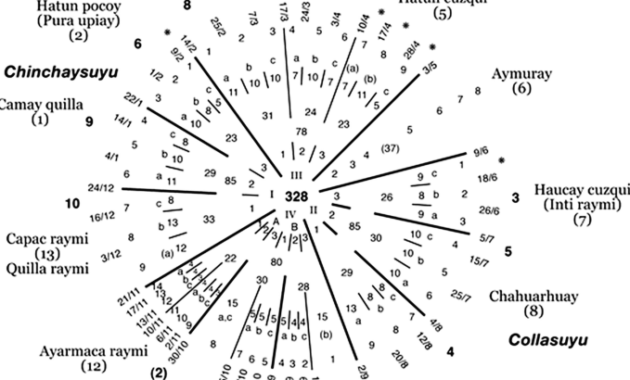
Cusco’s 41 ceques—radiating lines of 328 huacas (shrines)—divided the empire’s ritual calendar. Read clockwise from solstice, each huaca marked a day, grouping into 15-month cycles blending synodic (lunar) and solar periods. Capac Raymi (December) initiated noble youths; Inti Raymi (June) celebrated sun’s return with 9-day feasts.
This huaca network integrated geography and astronomy: inner ceques for elites, outer for commoners. Pilgrims traversed lines during solstices, reinforcing Sapa Inca’s cosmic centrality and social hierarchy through timed rituals.
Solar Calendar: 12 Months of Agricultural Precision
Inca solar year featured 12 months of 30 days, intercalated via festivals to match 365.25-day tropical year. Key months: Camay (January, purification), Hatun-Pocoy (June solstice harvest), Coya Raymi (November, women’s festival). Quipus with 328 knots (11 lunar + solar adjustments) aligned planting—potatoes at first rains, maize at Pleiades setting.
High-altitude farming demanded accuracy: andean dark constellations (Llama, Condor) predicted frosts, ensuring storehouses fed the empire through mit’a labor rotations.
Machu Picchu: Empire’s Astronomical Crown Jewel
Intihuatana: Multifunctional Sundial Stone
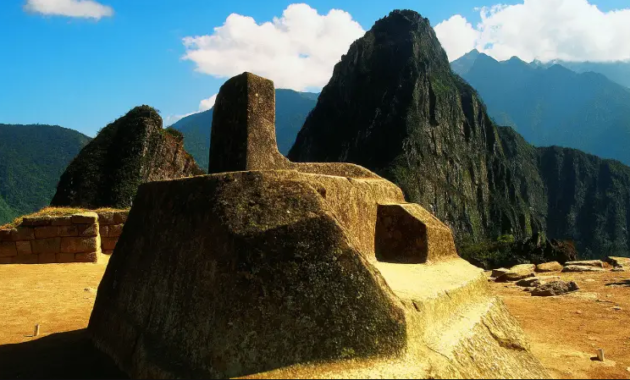
The “Hitching Post of the Sun” at Machu Picchu cast no shadow at June 21 noon solstice, “tying” Inti from fleeing. Carved facets tracked daily arcs (accurate to 15 minutes), equinoxes, and lunar stands. Shadows patterned seasonally, guiding priests in offerings.
Torres del Sol and Three Windows
Twin towers framed winter solstice sunrise over Huayna Picchu; Room of Three Windows aligned to Southern Cross rising, marking agricultural starts. Mountain peaks served as fixed horizons for stellar risings, integrating terrain into observatory.
Sacred Geometry in Stone Alignments
Temples oriented 23° south of east tracked sunrises; Torreon window hit noon sun on solstices. This encoded base-10 math from quipus, with proportions mirroring celestial ratios for harmonic cosmos.
Lunar and Stellar Observations in Daily Life
Lunar months via naked-eye tracking informed women’s ceque rituals; Pleiades (Qullqa) descent signaled sowing. Dark cloud asterisms—Yacana (river llama)—forecast rains. Priests-astronomers (clavijeros) used ceques for eclipse warnings, averting panic with pre-planned sacrifices.
Vast road network relayed observations from observatories to Cusco, standardizing time across time zones for synchronized empire events.
Quipu-Astronomy Integration: Administrative Genius
Khipus recorded solstice dates, tribute quotas per month, population by age cohorts for labor drafts. Color codes: green for maize, white for silver linked to festivals. A single quipu could audit 5-year cycles, matching Machu Picchu predictions for tax collection.
This fusion scaled Tawantinsuyu: storehouses timed to harvests fed armies marching on calendar-aligned campaigns.
Rituals and Social Order Through Timekeeping
Sapa Inca embodied Inti, his Capac Raymi investiture resetting calendar. Nobles fasted during solstices; commoners joined hacayacuy (shrine circuits). Failed predictions—like prolonged frosts—prompted huaca offerings, maintaining divine reciprocity (ayni).
Gendered calendars: women led November festivals; men Capac Raymi warriors, embedding time in identity.
Legacy: Modern Echoes of Inca Astronomy
Quechua farmers still watch Pleiades for planting; Inti Raymi draws thousands to Cusco. Quipu studies via AI decode lost data; Machu Picchu alignments teach sustainable timing. Inca system proves non-literate cultures achieved precision rivaling Babylonians.
How to Experience Inca Timekeeping Today
- Visit Intihuatana June 21 for solstice—noon miracle.
- Study Qeswachaka bridge quipu replicas.
- Join Cusco ceque pilgrimage recreations.
- Track andean constellations via apps modeling Inca skies.
Inca timekeeping—from quipu knots to solar stones—architected the largest pre-Columbian empire, blending math, sky, and society seamlessly.